Prince Claus laureate Jivya Soma Mashe is renowned for his vivid representation of the Warli vision of nature and culture in equilibrium, and for highlighting the contemporary relevance of local forms of knowledge. SOIL, partially funded by the Prince Claus Fund is a unique double exhibition initiated by artist Jackie Sleper and the Indian art historian and curator Sushma K. Bahl.
> read more
samedi 29 septembre 2012


Johnny-come-lately
Source Business Standard by Kishore Singh
The honest intention serves up a platform for artists looking for their due and collectors for value — but does it deliver on its promise? I was fortunate in having, for company, a keen collector with a very generous budget and a mandate to help identify any work (or works) that he would willingly buy — his contribution to emerging artists of exceptional talent. We teetered up aisles and down corridors, looked left and right, even managing to speak to a few artists — mysteriously, the artworks weren’t labelled — but, despairingly, failed to find anything to take back home.
> read more
vendredi 28 septembre 2012
The United Art Fair: First Impressions
Source Art Info
In a bizarre, inexplicable, and possibly unintentional twist, the most overwhelming democratic space in the two halls that comprise the United Art Fair is the VIP lounge.
> read more
lundi 24 septembre 2012
Mithila painting exhibition at Fresno State

Source Fresno States News by Joan K. Sharma
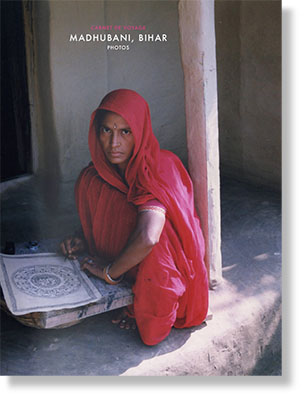
The British colonial officer in Madhubani District, William G. Archer, “was stunned by the beauty of the paintings and similarities to the work of modern Western artists like Klee, Miró, and Picasso,” Sharma added, so he made black-and-white photographs that were the earliest-know images of the Mithila work. Archer later became the South Asia curator at London’s Victoria and Albert Museum. In 1977, American anthropologist Raymond Owens was conducting research in Madhubani and was similarly “stunned” by the Mithila paintings, now on paper, and shared some with fellow anthropologist David Szanton. They helped establish the Ethnic Arts Foundation, dedicated to sustaining the Mithila painting tradition.
> read more
dimanche 23 septembre 2012
Vernacular Moment: Rethinking Tribal Art
Source The Sunday Guardian by Julia Marchand
It seems that "tribal art" has somehow succumbed to a more appropriate word: vernacular art, a term that best describes the unique and rich diversity of the Indian contemporary art scene. "In claiming its diversity and hybridity as part of contemporary art, India not only acknowledges its rich pluralistic existence but also re-configures the definition of contemporary" (art historian and curator Yashodhara Dalmia.) Re-configuring the notion of contemporaneity in India goes hand-in-hand with its market, and the systematisation of vernacular production, circulation and valuation.
> read more
vendredi 21 septembre 2012
Kochi to turn into a canvas for world artists

Source The Hindu by S. Anandan
This December, the contemporary art world will move into the city for a three-month sojourn beginning ‘12/12/12’, the day the maiden Kochi-Muziris Biennale (KMB) opens. India’s first biennale is billed to be a watershed in the port city’s evolution — from being a crucible of ancient cultures into an international hub of contemporary art.
> read more
mercredi 19 septembre 2012
11 milliardaires de plus vont donner la moitié de leur fortune
Source Metro
L'action philanthropique des plus riches américains se poursuit. Le duo de choc Bill Gates- Warren Buffet, qui ont lancé en 2010 l'opération "Giving Pledge" (promesse de dons) consistant à donner au moins la moitié de sa fortune à des œuvres caritatives, a convaincu onze milliardaires de plus. Au total, 92 fortunes ont pris cet engagement
Après le réalisateur George Lucas, le fondateur de CNN Ted Turner, le maire de New York Michael Bloomberg, le fondateur de Facebook Mark Zuckerberg ou encore le fondateur d'eBay Pierre Omidyar, c'est au tour du directeur général de Netflix, Reed Hastings, du co-fondateur d'Intel, Gordon Moore, et de l'ex-patron canadien du géant des boissons alcoolisées Seagram, Charles Bronfman, de promettre de se délester d'une partie de leur fortune.
> lire plus
Asian art seeing a resurgence in global market
Source Daily News by Madhusree Chatterjee
The sale of the Asian Modern and Contemporary Art at Christie's for four days Sept 11-14 at the Rockfeller Centre in New York that mopped up $44,735,075 is being labelled by experts as a comeback for art from Asia and India. The Indian section was led by an untitled oil-on-canvas work by V.S. Gaitonde, which the master from the progressive contemporary school painted in 1969. It raked in $962,500. Jonathan Stone, the chairman and international head of Asian Art, says the auction reflected a world-wide demand for the greatest objects of Asian art.
> read more
The long road
Source The Hindu by Neha Mujumdar
Writer-artist Gieve Patel’s lifelong fascination with people of the Warli tribe began in his grandfather’s estate. Warli adivasis worked on the estate, and when Patel, as a young man in his 20s, would try to interact with them, he would be discouraged, because they were from another caste. In an early poem, Grandfather, he attempts to sort out this puzzle – why does his kindly grandfather discourage him to mix with the ‘others’?
> read more
dimanche 16 septembre 2012
They joined the fight
Source Business Standard by Gargi Gupta
Painter-writer J Swaminathan and writer-artist Richard Bartholomew were two key, and lively, figures of the Delhi art world of the 20th century. Their sons seek to rescue their legacy. One was an eminent painter who started out as a journalist and remained, through his career, a writer who penned incisive essays on aesthetic and cultural debates in left-wing journals in the 1950s, ’60s and ’70s. The other was the preeminent art critic and newspaper reviewer of those decades, and an artist who painted (early on) and (later) took beautiful, intuitive photographs of his family, his artist friends and life around him.
> read more
vendredi 14 septembre 2012
Christie's sale of South Asian Modern and Contemporary Art achieves $7,060,625

Source The Economic Times
The successful sale can be attributed to works of exceptional quality, extraordinary history, and accessible estimates, which led to an enthusiastic response from clients throughout the entire sale. The modern art section reflected the continued strength and breadth of this collecting field and was led by Vasuedo S. Gaitonde's extremely rare Untitled, 1969, from the collection of Dr Bernard Peters, which achieved $962,500."
> read more
jeudi 13 septembre 2012
The art of misunderstanding

Kher’s work has been shaped by her decision to stay in India – as has her attitude towards artwork collapsing and things not going to plan. “In India,” she says, “you have to give a bit and you have to go with it.” The chaos that characterises life in the country’s teeming cities, and the clamour of its 1.2bn voices, is expressed in Kher’s poignant piece “Sing to them that will listen”. Part of the Parasol Unit show, it’s a small Tibetan “singing bowl” filled with rice, each grain hand-inscribed with words from an Indian Sunday newspaper’s matrimonial column. Phrases such as “fair girl”, “B.Tech” and “caste no bar” speak of the selection process behind each potential match – but these careful messages are mostly obscured by others, leaving chance to create its own order.
> read more
mercredi 12 septembre 2012
Atul Dodiya chez Daniel Templon
 Source Art Actuel
Atul Dodiya, né en 1959, vit et travaille à Mumbai. Fort d’une étonnante capacité à se réinventer, Atul Dodiya a investit un éventail complet de styles, se lançant dans des expérimentations toujours maîtrisées, depuis la peinture photo-réaliste de ses débuts jusqu’aux œuvres sur stores métalliques qui lui ont valu un succès international. Cette réflexion sur l’objet reflète son intérêt pour les aspirations de la classe moyenne indienne et l’impact de la globalisation sur ses traditions.
> lire plus
vendredi 7 septembre 2012
Three cheers for India's tribal & folk art

Source The Times of India by Archana Khare Ghose
I sincerely hope Saffronart makes this auction a regular feature in its annual calendar as tribal/ folk art deserves this recognition. Throughout my career of writing in art, I’ve faced difficulties in pushing stories related to this genre in newspapers where I’ve worked and even when I’ve got a go-ahead from a kind editor, it has always been tough sourcing images of these artists. If Saffronart’s auction succeeds, it would be a booster shot to the efforts of the very dedicated professor and former director of Crafts Museum in Delhi, Jyotindra Jain, who has been inarguably the strongest voice in favour of Indian tribal/ folk art for a long time, and also to the efforts of Meena Verma and Tulika Kedia who have been brave enough to open dedicated galleries to folk/tribal art in the commercial art hub sector of Lado Sarai in New Delhi. This write-up cannot be complete without mentioning the French art connoisseur Herve Perdriolle who runs a gallery in Paris that has such a vast collection of tribal and folk art from India that an average Indian would be surprised on beholding it all.
> read more
lundi 27 août 2012
Contemporain, un mot, plusieurs cultures !

> lire plus
Jangarh Singh Shyam à la Biennale de Gwangju !

Des œuvres de Jangarh Singh Shyam, le légendaire artiste de la tribu Gond, ont été sélectionnées pour la Biennale de Gwangju du 7 sept au 11 nov 2012. En proposant ces œuvres, Nancy Adajania –critique d'art indienne et membre du comité de sélection- renoue avec l'esprit du grand peintre et penseur indien, Swaminathan, associant l'art contemporain véhiculaire, issu de culture globale, à l'art contemporain vernaculaire, issu de culture locale. A découvrir aussi les œuvres de l'artiste indienne Sheba Chhachhi et celles des français Laurent Grasso et Chris Marker.
> Biennale de Gwangju
dimanche 26 août 2012
Première vente d'art tribal indien chez Saffronart
Cette première vente d'art contemporain vernaculaire a été un succès malgré le fait que de nombreuses œuvres présentées venaient du premier marché. Les estimations raisonnables, plus que la qualité moyenne des œuvres, ont permis la bonne tenue de cette vente. Selon Saffronart les lots ont été acquis autant par des nouveaux collectionneurs que par des collectionneurs d'art moderne et contemporain ouvrant leur collection à l'art tribal; la localisation des acheteurs est principalement indienne et américaine.
Swami and His Friends
Source The Indian Express by Vandan Kalra
The exhibition display ends at a junction where most others would have liked to make a beginning — in 1969, a year after artist-writer Jagdish Swaminathan was awarded the Nehru Fellowship to research on folk and tribal art in India. It was this journey to the interiors of Kinnaur, Kutch and Bastar that introduced him to his own language of art, one that includes birds, trees and mountains in the well-ordered geometrical spaces. This experience was to last his entire lifetime.
> read more
Tribal art goes contemporary
Source My Digitalfc by Jhupu Adhikari
There appears to be a new and refreshing trend among the capital’s art galleries these days where they are choosing to exhibit folk and tribal art. The earlier tendency was to include such works under the category of crafts and it is heartening to find that slowly but surely, folk art is gaining acceptance under the category of fine art. Well-known art critic and curator Suneet Chopra is on record as having said, “We look forward to the era when tribal art will be displayed alongside modern contemporary art around the world.”
> read more
Gond artist's works dominate Saffronart's tribal art sale
Source IBN Live
Five works of late Gond artist Jangarh Singh Shyam fetched Rs 21.25 lakh at online auction house Saffronart's first sale of Indian Folk and Tribal Art and Objects that realised a total of Rs 51.06 lakh. Besides Shyam, the auction also featured exceptional works by other Gond artists like Ram Singh Urveti, as well as works by renowned Warli artist Jivya Soma Mashe and other tribal artists like Bhuri Bai and Pushpa Kumari. "The art market for contemporary Indian tribal and folk arts is still nascent, and with this sale we offered collectors an opportunity to acquire original works of art by some of India's most talented folk and tribal artists."
> read more
jeudi 23 août 2012
Gond artist star at tribal art auction

Source Times of India
Celebrated Gond artist Jangarh Singh Shyam was the star of the Saffronart online auction that happened over the past two days. The total winning bid of four of his works was Rs 21, 25, 224. In fact, three of the top five bids were of his. A thorough master of his art, Shyam's criticallyacclaimed career that started when he was 17 was cut short in 2001 after he committed suicide at the age of 39 in Japan. His legacy is preserved in his body of work, a few of his work made it to the online auction.
> read more
mercredi 22 août 2012
Art with an Indian heart
Source Hindustan Times by Chetna Dua
This edition focuses on Indian contemporary art with a generous dose of tribal and miniature art. “Each year we are very selective about showcasing artworks for this annual show,” says Payal Kapoor, curator of the show. She adds, “This year we are showing how Indian art matured over the years and carved it’s own identity. The works selected have distinctly Indian ethos.”
> read more
samedi 18 août 2012
Saffronart announces its first auction of Indian folk and Tribal art
Source Art Daily
Speaking about the auction, Dinesh Vazirani, CEO and Co-founder of Saffronart said, “One of our objectives has always been to promote Indian art and culture, and to build awareness and appreciation for India's artistic heritage and traditions. The art market for contemporary Indian tribal and folk arts is still nascent, and with this sale we hope to develop it by offering collectors an opportunity to acquire original works of art by some of India’s most talented folk and tribal artists and craftspeople, and tapping the interest of collectors.”
> read more
jeudi 9 août 2012
La panne de l'éléphant indien
Source Le Monde par Julien Bouissou
L'Inde possède de formidables atouts : une élite formée dans les meilleures universités du monde, un tissu d'entrepreneurs et une consommation intérieure dynamique qui l'aide à tenir bon dans une conjoncture internationale morose. Mais certains de ses atouts pourraient vite devenir des épines. Les inégalités se creusent, même si la pauvreté recule. D'ici à 2026, 150 millions d'Indiens vont arriver sur le marché du travail ; selon qu'ils seront instruits et formés ou pas, ils iront grossir les rangs des travailleurs pauvres, ou au contraire ils feront gagner deux points de croissance par an à l'Inde.
> lire plus
Inscription à :
Articles (Atom)

 Articles