Source Art Media Agency
La mondialisation du marché de l’art n’est pas un phénomène récent. Il s’agit même d’une condition structurelle de la constitution de ce marché, et ceci dès le XVIe siècle, lorsque la circulation des œuvres et des artistes s’est intensifiée en Italie, puis sur l’axe Paris-Londres-Amsterdam. Ce qui a changé, c’est l’amplification des échanges internationaux et l’accélération des basculements d’un pôle à l’autre, après une longue période de concentration sur les États-Unis et l’Europe. Pourtant, l’Amérique a longtemps été considérée comme indétrônable : elle représentait encore 50 % du marché mondial en 2000, deux fois moins une décennie plus tard. En 2011, 43 % du marché de l’art mondial a été réalisé en Asie, loin devant les États-Unis (23,6 %) et la Grande-Bretagne (19,4 %). Retour sur une cartographie en profonde mutation.
> lire plus
mardi 26 février 2013
L’art : un marché sans frontières ?


dimanche 24 février 2013
Outsider Art Fair NY
Source Art Forum by Michaela Slavid
Part of the fair’s draw is the generous program of talks, organized for the second year by Valérie Rousseau. (She’s a new member of the American Folk Art Museum’s curatorial team, and is married to Edlin.) Sunday’s panel, “A Bridge Between Art Worlds,” brought curators Massimiliano Gioni, Daniel Baumann, and Ralph Rugoff together on the roof of the Dia building. Their priority: how to lift the veil from outsider art’s seclusion. Referencing similarities between work (created concurrently, and without cross-pollination) by Adolf Wölfli and the Dadaists, Baumann implied that similar parallels might hold keys to a more comprehensive art history. Gioni, in turn, suggested exhibiting outsider artwork “not as a new king or queen we crown in our museums,” but as a force to disrupt the status quo. (Perhaps a dethroning in favor of anarchy!)
> read more
samedi 23 février 2013
Amrita Jhaveri: A Prescient Eye for Indian Art

Source Sotheby's by James Reginato
In the late 1990s, Amrita Jhaveri took a gamble when she paid nearly $500 for a painting by a young, unknown Indian artist. It was so large she had nowhere to hang it, and Contemporary Indian art was then barely recognised as a field in which to collect. Three years later, in 2001, Tate Modern asked to borrow the picture – We Will Repay our Debt Sometime, by Girish Dahiwale – for its inaugural exhibition, Century City. “I felt really flattered,” Jhaveri recalled on a recent afternoon over tea in the boardroom of Sotheby’s London offices. Moreover, Jhaveri sensed she was on to something: Contemporary Indian art was a field about to come of age.
> read more
jeudi 21 février 2013
India's First Contemporary Art Biennale – Bucking the Trend

Source Mutual Art by Lihi Raviv
“There are parallel contemporaries in Indian art”, concludes Sunish, “One that is learnt and produced by artists coming out of urban ‘fine art’ institutions (the systems of which are a colonial residue), and a whole lot of others coming from a traditional or ‘folk’ stream of art and craft, that is integral to the various regions of India, and is now producing artists who are keen to take part in the expression of an Indian contemporary. This period is one of negotiation and collaboration among these two sections, and the market also has to make space for these experimental contemporaries.”
> read more
mercredi 20 février 2013
Material World

Source Art Forum by Zehra Jumabhoy
The Fifth Edition of the India Art Fair kicked off with a bang. Or should I say a smash? At the fair’s opening a couple weeks ago, dealer Lorenzo Fiaschi subbed in for artist Michelangelo Pistoletto—infamous in recent years for his performance Twenty-Two Less Two, in which he breaks giant gilded mirrors with a sledgehammer—and had a go at a piece of long, silvery looking-glass. CRACK! it went, shooting glittery shards all over Galleria Continua’s booth: The VIP preview had begun.
> read more
mardi 19 février 2013
François Hollande : Ganesh, ce dieu éléphant qui lui ressemble énormément

Source The Huffingtonpost
François Hollande, réincarnation d'une divinité hindoue ? L'hypothèse développée, non sans humour, par un économiste spécialiste de l'Inde a bien fait rire les invités de l'émission 28 minutes sur Arte. Mais sa théorie a fini par convaincre la correspondante à Paris du quotidien indien The Hindu : "Il y a une certaine ressemblance" a-t-elle concédé, un brin amusée.
> lire plus
dimanche 17 février 2013
Pick of the lots

Source Business Standard by Kishore Singh
Fifteen years ago — a lifetime in Indian art, according to some — Amrita Jhaveri started collecting modern and contemporary art somewhat more seriously than most, becoming one of the earliest specialists with a calibrated eye for picking art works that represented the best of each generation’s artists. The catalyst for that original impulse had been triggered by the inclusion of a work she’d acquired — “even before I had a flat”, she laughs during our conversation — in the Tate’s Garden City exhibition, and now Jhaveri seems bent on returning that favour by providing the Indian art market with a pleasant jolt.
> read more
samedi 9 février 2013
The Sahmat Collective: Art and Activism in India since 1989

Source Smart Musuem Chicago
Since 1989, the influential Delhi-based Sahmat has offered a platform for artists, writers, poets, musicians, actors, and activists to create and present works of art that promote artistic freedom and celebrate secular, egalitarian values. The collective formed in the weeks after playwright, actor, and activist Safdar Hashmi was fatally attacked by political thugs while performing a street play. In the more than twenty years since, Sahmat has drawn on India’s secular heritage and an expansive group of collaborators to produce a series of projects that engage in important political and social debates through a mix of high art and street culture. This exhibition will introduce Sahmat's work to the United States.
> read more
The 5th India Art Fair and Parallel Events

Source Art Agenda by Natasha Ginwala
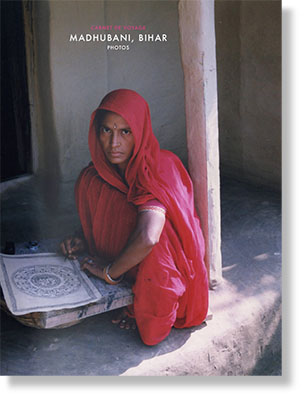
Between thematic panel sessions at the Speakers’ Forum bringing together a dynamic line up of participants including critic-curators Adriano Pedrosa, Chus Martínez, Geeta Kapur, and Barbara London, among others, I slipped back into the fair to view the exceptional works of indigenous women artists, Yamuna Devi (1915–2011) and Chano Devi (1938–2010) at Paris-based collector and gallerist Hervé Perdriolle’s booth. These artists significantly transformed the traditional style of Mithila painting, interspersing native divinities and animist faith-motifs with local botanical and celestial references.
> read more
lundi 4 février 2013
Kiran Nadar Is Bringing Contemporary Indian Art Home in a Big Way

Source Art Info by Rosalyn D'Mello
Line of Control debuted in London in the 2009 Tate Triennial, which is where Nadar first encountered the piece. “Overwhelmed,” as she describes it, by the work’s “awe-inspiring” nature, she decided on the spot to acquire it for KNMA, India’s first private museum for modern and contemporary art. “It is one of the most phenomenal works any artist could have done. I had to have it,” Nadar said with conviction when asked if she had considered the logistical challenge that transporting and installing such a gargantuan work would present.
> read more
jeudi 31 janvier 2013
La foire India Art Fair a construit un marché en Inde

Source Le quotidien des Arts par Roxana Azimi
Chaque année, de nouvelles galeries ouvrent et nous avons de 20 à 25 % de candidatures supplémentaires provenant de galeries indiennes. Nous n’en retenons que peu car nous avons un comité très sélectif. Mais nous avons reçu à peu près 200 candidatures cette année. En quatre ans, nous avons eu un total de 300 000 visiteurs, ce qui est la plus grande contribution possible pour apporter l’art au plus grand nombre. Nous avons des bénévoles issus de 70 écoles d’art de toute l’Inde qui depuis deux ans viennent faire leurs armes sur la foire. D’ici cinq à dix ans, le salon jouera un rôle significatif en Asie. Les Indiens sont de plus en plus des citoyens mondiaux.
> lire plus
Le marché indien en (lente) progression

Source Le Quotidien des Arts par Roxana Azimi
Lentement, mais sûrement. Tel est le rythme de croisière (ou d’éléphant) du marché indien depuis la première vente d’art moderne indien organisée en 1995 chez Sotheby’s à Londres. La donne changera-t-elle avec la dispersion à New York chez Sotheby’s, le 19 mars prochain, d’une quarantaine d’œuvres de la collection de la courtière Amrita Jhaveri,
estimée de 5 à 7 millions de dollars ? On y trouvera notamment une toile du rarissime Vasudeo S. Gaitonde pour 600 000-800 000 dollars, ainsi qu’une toile de Tyeb Mehta estimée de 800 000 à 1,2 million de dollars.
> lire plus
vendredi 25 janvier 2013
Illustrious affair: India's art fair is less than a week away from its grand opening

Source Mail Today by Nikita Puri
The fair which opens on February 1, has an eclectic mix of artists and speakers. "You have to see Jitish Kallat's Covering Letter (supported by Chemould Prescott Road, Mumbai)," gushes Kirpal, "It's a piece on Gandhi's letter to Hitler written in 1939 – it's a tunnel in the middle of the maidan, you can actually walk through it."
In the maidan, contemporary Indian set designer Sumant Jayakrishnan's tent made out of paper cups on an aquamarine background is where the action will take place.
> read more
The Fair Fares Well
Source Livemint by Pradip Kumar Saha
“The Art Fair is a key event in the Indian cultural calendar. The growth in the appreciation of contemporary art from India is the responsibility of us all—auction houses, organizers, curators, gallerists and exhibitors,” Jaffer adds.
Jaffer’s enthusiasm is justified. Austria’s Galerie Krinzinger, which has been participating for the past two years, says, the response “has been very good for us. We made interesting contacts and good sales”.
> read more
mardi 22 janvier 2013
Nasreen Mohamdei retrospective at the NKMA

The drawings and photographs of Nasreen Mohamedi (1937-1990) are slowly but surely becoming better known to a wider American audience. In 2003, Holland Cotter, who has been her most eloquent champion in New York, wrote in the New York Times, “if people, especially young artists, knew about Mohamedi, they would love her the way they do Eva Hesse.” The first retrospective dedicated to Nasreen Mohamedi at the KNMA will be one of the strong events in parrallel to the India Art Fair.
> NKMA website
A view to infinity

L'un des évènements parallèles à L'India Art Fair sera la première rétrospective dédiée à l'une des figures majeurs de l'art contemporain indien Nasreen Mohamedi au KNMA (Kiran Nadar Museum of Art). Curieusement les seules pages Wikipedia que l'on trouve sur le web à propos de cette artiste née à Karachi en 1937 et décédée en 1990 sont en allemand et en polonais ! Cette rétrospective devrait nous permettre d'admirer un travail minimaliste d'une grande rigueur allant principalement du dessin à la photo.
> site web KNMA
lundi 21 janvier 2013
Living Walls of legend

Source Livemint by Shreya Ray
As one of the collateral events surrounding the India Art Fair that opens on 3 February, Living Walls is a unique initiative that reverses the logic of the art fair itself. “The idea here is to decommoditize art,” says Sunaina Anand of Art Alive Gallery. “Art has become so focused on the commercial aspect that we wanted to do something that would not give in to the logic of buying and selling.” And so came the idea of some of the biggest names in the country painting the walls of the gallery. “This is not something you can pick up and walk away with,” says Anand.
> read more
vendredi 18 janvier 2013
En Inde, il y a aussi des Biennales

Source Le Quotidien de l'Art par Cédric Aurelle
Alors que le Tout-Paris s’ébaubit du bleu du ciel sur la rade de Marseille en hiver et s’interroge, entre pastis et bouillabaisse, quant au devenir culturel de la capitale provençale, c’est à un exotisme non moins portuaire et à un déplacement de regard tout aussi fécond que deux jeunes artistes indiens, Riyas Komu et Bose Krishnamachari, invitent les amateurs d’art dans le cadre de leur Biennale de Kochi-Muziris.
> lire plus
jeudi 17 janvier 2013
Mumbai gallery to present five top artists at India Art Fair
Source Times of India by Kasmin Fernandes
In the plethora of artworks by 1,000 artists displayed by 105 galleries from 24 countries at the upcoming 5th edition of India Art Fair, one contemporary gallery from Mumbai is set to make distinct mark. Mumbai's Volte gallery, located near Radio Club in Colaba, will bring down some of the best works of renowned international artists Wim Delvoye and William Kentridge along with Ranbir Kaleka, Raghava KK & Sheba Chhachhi.
> read more
dimanche 13 janvier 2013

Source ArtInfo
We got the news this morning that award-winning South African artist William Kentridge is to join the final jury for the Skoda Prize. The legendary artist will also “present the Skoda Prize trophy to this year’s winner,” art critic and the prize director Girish Shahane confirmed, adding that the credit for the honor goes to gallerist Tushar Jiwarajka “for facilitating it”. Jiwarajka is currently in the process of putting together a show of Kentridge’s work at his Volte gallery in Mumbai.
> read more
samedi 12 janvier 2013
Biennale de Kochi: sur la côte Malabar s’affiche l’art nouveau de l’Inde et du monde

Source RFI par Tirthankar Chanda
La visibilité grandissante de l’art indien contemporain a conduit les professionnels à mettre l’accent sur sa valeur commerciale. Le chiffre d’affaires du marché d’art indien est en effet passé de 3,5 millions d’euros en 2003 à 280 millions d’euros en l’espace d’une décennie. Une croissance certes exponentielle, mais l’art ne se réduit pas à son prix calculé en espèces sonnantes et trébuchantes. Pour énoncer un nouveau discours basé sur les valeurs esthétiques et sociales de la pratique artistique, il fallait s’éloigner de Delhi et de Bombay, les deux grands centres de l’art contemporain indien.
> lire plus
mardi 8 janvier 2013
Break out the bubbly yet?
Source Business Standard by Kishore Singh
Any hope of that rests to an extent on what is now the annual hoopla of the India Art Fair (opening January 31), though to say — as has been said, or perhaps hoped, in previous editions — that it alone reflects the fluctuations of the art market would be fatally flawed. Several gallerists have tended to load all their eggs in the Art Fair basket, ignoring the significance of holding more ambitious exhibitions within their own ambit for the rest of the year, to their own detriment. But where the Fair will have to deliver this year in particular is in the form of serious, new, corporate as well as international buyers who in previous years have tended to be scarce on the ground. Participants will no longer view its success on the number of eyeballs it garners — which is an important measure of people’s interest in art — but on the number of wallets it ends up emptying.
> read more
dimanche 6 janvier 2013
Showcase: Transforming space

Source The Hindu by Swati Daftuar
Curated by Raqs Media Collective and presented by Devi Art Foundation, Gurgaon, the exhibition attempts to bring various methodologies and art practices together over a nine-month period. Raqs’ emphasis on growing an exhibition organically within a particular space will shape the gradual appearance of the show, which will grow over the next nine months, with contributions from as many as 100 people from different fields.
> read more

 Articles