Source The Huffington Post by Anders Petterson
Luckily, the auction figures say little about the actual state of the today's South Asian contemporary art market, which has evolved through new and alternative channels. Since 2009, the region has seen eight new biennials and festivals. These include the Kochi-Muziris Biennale (India), Dhaka Art Summit (Bangladesh), Colombo Art Biennial (Sri Lanka), Pune Biennial (India), and the Serendipity Arts Festival (India), with a further two biennials planned for Lahore and Karachi in 2017. In the absence of government support, private foundations are playing an increasingly active and important role in building an infrastructure for contemporary art and artists. Private museums such as Kiran Nadar Museum of Art (India) and foundations such as the Samdani Art Foundation (Bangladesh), Inlaks Shivdasani Foundation (India), and the Gujral Art Foundation (India) are among these important initiatives. The India Art Fair has and is playing a critical role in the above development, acting as a platform for both commercial galleries as well as not-for-profit initiatives. This year's edition includes the likes of Britto Arts Trust (Bangladesh), Theertha International Artists Collective (Sri Lanka), Kiran Nadar Museum of Art (India) and Swaraj Art Archive (India), presenting and exhibiting alongside commercial galleries.
> read more
dimanche 5 février 2017
India Art Fair: An Antidote To The Increasing Influence of Auctions


Vernacular spectacular: Craft goes mainstream at India Art Fair

Source The times of India by Neelam Raaj
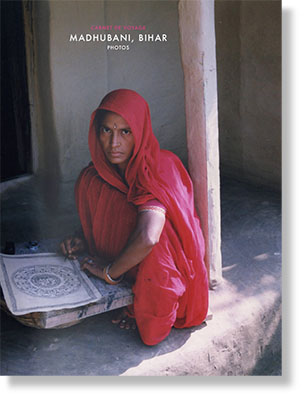
It's pretty rare to see Gond and Madhubani paintings rub noses with the Subodh Guptas and Manjit Bawas. It's even stranger when the setting is the India Art Fair, where commerce takes precedence over culture. Tribal, folk, naive or native art - all labels that art historians now vehemently oppose - is usually to be found in craft museums, trade fairs or Dilli Haat. Most contemporary art shows give it a wide berth. At best, you get the odd work hung in the name of "inclusion". But with the India Art Fair, once considered a scrappy upstart, becoming more confident of its place on the global art map, it's decided to not only represent work from across South Asia but also widen the definition of contemporary Indian art to include vernacular art.
> read more
vendredi 3 février 2017
In its ninth edition, the halls of India Art Fair draw from the global refugee crisis, present-day politics and violence against women

Source The Indian Express by Vandana Kalra, Pallavi Pundir
From being a forum that brings artists from all over the world to the one that will focus on South Asia, India Art Fair (IAF) has changed its course over the nine editions since it debuted in 2008. The transformation was obvious when the four-day event opened on February 2 at NSIC grounds in Okhla. Dominated by artwork from India, followed by Bangladesh, Sri Lanka and Pakistan, the opening had the biggies from the art world in attendance. Among those present were artists Jitish Kallat, Subodh Gupta, Riyas Komu and Tayeba Begum Lipi, curator Shanay Jhaveri, collectors Kiran Nadar, Anupam and Lekha Poddar. Also seen in the aisles were Sheena Wagstaff, the Leonard A. Lauder Chairman for Modern and Contemporary Art at The Metropolitan Museum of Art in New York, and Richard Armstrong, director of the Solomon R Guggenheim Museum in New York. Here are some of the sights and sounds from the IAF.
> read more
L'Outsider Fair a redonné à l'art son importance

Source The New York Times par Roberta Smith
L'Outsider Art Fair de New York, qui s'est ouverte jeudi, célèbre son 25e anniversaire. La foire a fait ses débuts en 1993 dans un immeuble du 19e siècle, le Puck Building, dans le quartier de SoHo. J'ai vu la première édition, couvert la deuxième et écrit maintes fois par la suite sur la foire. J'aime la plupart des foires artistiques pour la densité quasi-marathonienne de leur expérience visuelle et de leur information, mais l'Outsider Art Fair est devenue très vite ma préférée. Elle a redonné ses titres de noblesse à l'art. Distincts des artistes populaires qui évoluent en général au sein d'un milieu familier, les artistes outsiders ont souvent travaillé sans précurseur dans un isolement relatif. Ce sont des personnes ayant un retard dans leur développement, des visionnaires, des internés, des solitaires ou tout simplement des retraités dont le hobby a pris soudain une tournure intense et originale. Le terme a longtemps fait débat et sa signification est devenue élastique et inclusive. Mais peu importe comment le concept était ou est défini, l'Outsider Art Fair est la foire qui, en comparaison avec les autres, paraît la moins prétentieuse, la moins portée sur l'argent, la plus brute, la plus animée et la plus remplie de surprises.
> lire plus
> english version
jeudi 2 février 2017
Anish Kapoor Revisits Joseph Beuys in Trump Protest Work

Source Artnet by Amah-Rose Abrams
Kapoor has re-created the poster for Beuys’ performance work I Like America and America Likes Me (1974). It features a photograph of Kapoor with the title I Like America and America Doesn’t Like Me written in a pseudo Antiqua–Fraktur font commonly associated with Nazi German media. Beuys’ 1974 work saw him wrapped in felt upon arriving at JFK airport in New York, and transported to the René Block Gallery in an ambulance, where he spent the entirety of his three-day stay in a room with only a torch, a cane, a wild coyote, and a felt blanket. The performance is seen as a protest work, as Beuys never really saw any of the US, or technically set foot on American soil. The British-Indian Kapoor, whose mother is Jewish, is no stranger to protest. In 2015 he completed a walk for refugees with Chinese dissident artist Ai Weiwei across London and had a heated dispute with members of the French political class after he refused to remove anti-Semitic graffiti from his work on view at the Palace of Versailles.
> read more
The joyful search for beauty

Source The New Indian Express by Shevlin Sebastian
Lokesh Yadav, a student artist from Chhattisgarh, is going to get a shock. One of Europe’s noted art collectors, the Brussels-based Frédéric de Goldschmidt, has expressed an interest in acquiring his work. “It is an imaginative work,” says Frédéric. The art work, ‘Think About Yourself’, has been displayed at the Students Biennale at Mattancherry. It represents a sheep, in the form of a comb, which is talking into a microphone. “I liked the sense of individuality which is conveyed by this solitary sheep, who wants to be heard by the herd,” says Frédéric. This work, by Yadav, is part of the 465 works by students of 55 art schools from across the country. “I was very impressed by the works of the Indian students,” says Frédéric. “Since they are all studying art, I hope they will be able to make a living out of it.” Interestingly, Frédéric became aware of the Kochi-Muziris Biennale only a couple of months ago. He saw a few photos, on Instagram, and found it interesting. So he decided to come, since he had been invited to the India Art Fair at New Delhi and decided to combine the two events.
> read more
When art meets business
Source The Asian Age by Bose Krishnamachari
It is that time of the year when the art community gathers in New Delhi to attend the India Art Fair. This is its 10th avatar. Exhibition spaces like museums and events like biennales, triennales, Manifesta and Documenta are the bedrock for bleeding edge contemporary art and theory and most works shown here are produced exclusively for the event guided by the vision of a chosen curator or curators. Art fairs are different in that respect. As the name suggests, they are purely fairs where art meets business. Art fairs are occasions for gallerists, dealers, agents and collectors to meet and network. How can art or artists survive without commerce? The India Art Fair has 16 art projects apart from the display booths allotted to galleries, publications and other art world aficionados. This is where you find celebrated artists, collectors, film stars, musicians, designers and gallery enthusiasts, powerhouse gallerists and experimenters.
> read more
mercredi 1 février 2017
Renforcement de l’India Art Fair et du marché indien
Source Art Price
Pour sa 9ème édition, la India art fair de New Delhi (2-5 février 2017) se positionne avec un nouvel investisseur important : le groupe Suisse MCH, notamment propriétaire de la franchise d’Art Basel, la plus puissante foire d’art moderne et contemporain du monde, dont les éditions annuelles se tiennent à Bâle, Hong Kong et Miami. Ce nouveau partenaire de poids pourrait assurer à la India Art Fair un développement à mesure des ambitions du marché indien dans les années à venir… Mais si les projets sont ambitieux, le commerce de l’art manque sur place de soutiens gouvernementaux et plusieurs exposants étrangers ont testé à leurs dépends les lourdeurs administratives douanières et celles les taxes sur l’importation d’oeuvres d’art… notons que cette année, les puissantes galeries occidentales présentent sur le salon lors de précédentes éditions sont aux abonnées absentes: la Lisson, White Cube, Hauser & Wirth, Lelong et Continua ont délaissé New Delhi pour un temps. Le salon indien fait pourtant preuve d’une grande résistance, ayant traversé des périodes tumultueuses puisqu’il fut inauguré, rappelons-le, en 2008, année de la chute de Lehmann brothers, c’est à dire dans une période peu propice aux fondations d’un nouveau grand rendez-vous artistique et marchand.
> lire plus
mardi 31 janvier 2017
Most Expensive Indian Artwork!

Source Gulte
Have you ever wondered how much the costliest ever artwork produced by an Indian was sold for? Its just under Rs 30 Cr, mind-boggling isn't it? An Untitled oil painting by Vasudeo S Gaitonde, one of India's renowned abstract painters, has been announced the most expensive Indian artwork sold since 1965. This painting was sold for a whopping Rs 29.3 Cr (4.000.000 €) at an auction in Mumbai in December last year. Artery India, an eminent Indian art market intelligence firm, has come up with a list titled 'Artery Top 500 Works', which comprises the 500 most expensive Indian artworks.The cost of all these 500 paintings put together is Rs 1,936.60 Cr. The featuring works were sold at various global auctions since 1965.
> read more
lundi 30 janvier 2017
Life of Amrita Sher-Gil: An Artist Way Ahead Of Her Time

Source Feminism In India by Nupur Preeti Alok
She adopted a free independent provocative lifestyle in Paris. Her sense of liberation was visible through her art and her lifestyle both. It is believed that during the 1930s while she was living in Paris, she lived her life to the fullest and had homosexual relations with her best friend and roommate Marie Lousie Chassney, which both denied. In one of her letters, she wrote to her mother that she would have something with a female when the opportunity arises. She was attached and associated to many men at different points of her life, and is believed to have had a very sexually liberated life for the era she belonged to. In an article titled Modern Indian Art in the Hindu (November 1936), Amrita wrote, “The Indian art committed the mistake of feeding almost exclusively on the tradition of mythology and romance. I am an individualist evolving a new technique that though not necessarily Indian in the traditional sense of the word, will yet be fundamentally Indian in spirit.”
> read more
samedi 28 janvier 2017
Art served fresh, South Asian-style

Source The Hindu by Georgina Maddox
The Special Art Projects programme will present a selection of outdoor and indoor works — their creators span the range from high-profile Indian artists like Reena Saini Kallat, Sudarshan Shetty and Mithu Sen, to international artists like the Algerian-French Francis Limerat, Joël Andrianomearisoa and Anila Quayyum Agha, a Pakistani-American artist who has been making waves at Art Dubai with her evocative creations. Other emerging names like Parul Gupta, Hemant Sreekumar, Avinash Veeraraghavan and Rathin Barman can also be spotted at this section. Limerat’s work is minimal and relies on viewer’s participation to make it come alive. At the fair he is displaying a column of wood that has been perforated with voids and lines, and viewers are invited to peek through them. The work is a playful confrontation.
> read more
Preview: India Art Fair 2017

Source Livemint by Vangmayi Parakala
The four-day India Art Fair starting 2 February in Delhi will be the fair’s ninth iteration and will see the return of Platform, the segment focused on art from South Asian countries. This means that you will be able to view work from the galleries of neighbouring countries, like the Britto Arts Trust from Dhaka, the Nepal Art Council from Kathmandu, and the Theertha International Artists’ Collective from Colombo. A new space, curated by Annapurna Garimella, will be titled Vernacular In Flux. It will showcase Gond and Madhubani artists, and Mysore and Guruvayur painters and sculptors who have emerged with highly original works of art, practising within these traditions. Notable artists in this space include Jangarh Singh Shyam and Bhajju Shyam.
> read more
jeudi 26 janvier 2017
Here's what's happening at the India Art fair 2017

Source Verve by Nittal Chandarana
India Art Fair 2017 returns with an eclectic line-up of artists and art galleries. Platform, the unique venture that brings emerging as well as established work from South Asia into the limelight, returns with galleries like Blueprint 12 (New Delhi), Theertha International Artist’s Collective (Sri Lanka) and Britto Arts Trust (Dhaka, Bangladesh) participating this year. The Speaker’s Forum brings together curators, critics, gallerists and collectors for cultural discourse and discussion alike. The fair also sees Vernacular in Flux — a new curated space which focuses on vernacular art, a collector’s programme and a film programme, among other exciting events.
> read more
A Patron With an Eye for the Exceptional

Source Blouin Art Info by Archana Khare-Ghose
Being a part of Satish Gujral’s family must be a weighty legacy to carry. But Feroze Gujral, the veteran artist’s daughter-in-law, wears it with elan. As somebody at the forefront of India’s art eco-system, she has expanded her scope of activities to not just nurturing the legacy of her father-in-law’s sprawling oeuvre but fostering upcoming artists who need institutional support to push the envelope. “I hope that we, at the Gujral Foundation, are able to help those who are breaching new frontiers,” says Gujral in a chat with Blouin Artinfo.
> read more
India Art Fair: Taking South Asian Art Global?

Source Harper's Bazar
The 2017 India Art Fair, which takes place from 2-5 February in New Delhi, is a fair on the rise. With a new investor in the form of the Swiss-based MCH Group, this year marks a new chapter for the Modern and Contemporary art fair. MCH Group is the owner of the powerful Art Basel franchise, whose trio of events in Basel, Miami Beach and Hong Kong dominate the realm of high-end Modern and Contemporary art fairs. In September, MCH announced it had taken a majority stake in the India Art Fair, the first move in its plan to expand by buying stakes in smaller, existing regional art fairs. It’s important to note that this does not mean the India Art Fair will come under the Art Basel umbrella and organisation will be entirely separate. However, MCH’s move on the India Art Fair both recognises the importance of India as an important and growing market and, potentially, elevates it to another level, with the injection of capital and expertise afforded by such a large exhibition organiser.
> read more
vendredi 20 janvier 2017
12 Great Works You Just Might Be Able to Afford at the 2017 Outsider Art Fair

Source Artnet by Brian Boucher
It’s the rare art fair that inspires visitors to say to one another again and again, as they walk up and down the aisles, “Don’t you love coming here each year?” But the Outsider Art Fair is that kind of event. Open this weekend at New York’s Metropolitan Pavilion, on West 18th Street, the fair’s 25th edition brings together dozens of international dealers showing work by untrained artists, and you’re sure to find something you’ll want to take home. Here are some favorites we found, some by unknown artists, some by Outsider superstars, while roaming the VIP preview on Thursday afternoon, attended by a record-breaking 3,500 people, according to the organizers.
> read more
jeudi 19 janvier 2017
Outsider Art Gains Its Place Inside the New York Art World

Source The Wall Street Journal by Charles Passy
Ever since the term “outsider art” was coined decades ago, museum curators and gallery owners have debated its merits. Some say it unfairly casts the self-taught artists who typically fall into the category as unworthy of legitimate consideration. Others think the label is simply too vague. But when it comes to the New York art world these days, there is no debating one fact: Outsider art is definitely “in.” Consider the growth of the Outsider Art Fair, the New York showcase whose 25th edition kicks off Thursday at the Metropolitan Pavilion in Manhattan’s Chelsea neighborhood. The fair now welcomes 60-plus dealers from around the globe who specialize in the burgeoning genre—roughly double the number in the fair’s first year, according to Andrew Edlin, a gallery owner who is behind the event.
> read more
mercredi 18 janvier 2017
Tate Modern's director talks about her views on Indian Art
Source Verve by Huzan Tata
“We have a number of works by Indians on display at Tate at the moment.There’s a wonderful installation by Sheela Gowda that contains human hair and car bumpers. People are really drawn to this piece, one of the reasons being that it speaks about India’s modernity, and also about tradition. It’s a beautiful way of articulating the importance of India culturally in history. People have been really interested to see the works on paper by Benode Behari Mukherjee, which is on display next to a Matisse. Mukherjee’s work relates deeply to the Asian heritage of collage and fabric, and Matisse’s to another genre, but there is a connection too. I think people are interested in the difference and also the sameness, the strangeness, the familiarity. We are a nation that has strong historical links with India, so people feel a certain afficity.”
> read more
dimanche 15 janvier 2017
L’époque de la Figuration libre à l’honneur dans trois expositions indispensables
Source Les Inrocks par Jean-Marie Durand
Il faut avoir traversé frontalement les années 1980 en France pour mesurer aujourd’hui l’étrange sensation de voir réapparaître leur ombre portée dans le paysage de l’art, à la faveur de la présence réactivée de certaines de ses figures principales comme Robert Combas, Hervé Di Rosa ou de leur complice Ben. Trois expositions en guise de monographies reviennent en même temps sur le parcours de ces artistes phare de la décennie, un peu éclipsés dans les années 1990, et réapparus dans les années 2000 (création du musée international des Arts modestes à Sète par Hervé Di Rosa en 2000, première rétrospective de Robert Combas au musée d’Art contemporain de Lyon en 2012…). De Ben à Robert Combas et Hervé Di Rosa, c’est donc une page de l’histoire de l’art hexagonal des années 1980 qui se rappelle à nos souvenirs, comme une manière d’affirmer contre tous ceux qui en avaient négligé le poids depuis une vingtaine d’années, que la Figuration Libre fait aujourd’hui moins de la figuration qu’elle n’affiche la persistance de sa liberté, colorée, prolifique, modeste.
> lire plus
jeudi 12 janvier 2017
La Maison Rouge fermera ses portes en 2018

Source Le Monde par Philippe Dagen
Le collectionneur et mécène Antoine de Galbert a confirmé publiquement, mercredi 11 janvier, ce qu’il avait annoncé à ses collaborateurs de La Maison Rouge la semaine précédente : la fermeture à la fin de 2018 de ce lieu d’exposition, ouvert en 2004 et vite devenu l’un des points les plus chauds de l’actualité de l’art contemporain à Paris. La Maison Rouge, installée dans une ancienne usine boulevard de la Bastille, aura donc été durant quatorze ans la part très visible de l’action de la Fondation Antoine-de-Galbert, créée en 2000 par ce « collectionneur et exploitant agricole » – dixit Internet, non sans humour.
> lire plus
dimanche 8 janvier 2017
Fotofest 2018 Biennial Puts Spotlight on Media Art From India

Source Artnet News by Henri Neuendorf
Next year, Fotofest will celebrate a first in its history. The Houston-based nonprofit announced on Thursday that it will focus on artworks from India. The festival, titled “India: Contemporary Photography and New Media Art,” will present the latest creative output of Indian artists and the Indian diaspora. According to lead curator Sunil Gupta, the biennial promises to be one of the most exciting and engaging editions to date. “As a large, multilingual subcontinent, India has always relied on images to maintain a cohesive whole across myriad subcultures, regions, castes and languages,” Gupta said in a statement. He went on to give a few clues about what to expect, saying, “This exhibition will address the legacy of the last 20 years, a period when photography and moving image media have been consistently included within critical exhibitions of fine art.”
> read more
La biennale du bout du monde

Source Les Echos par Judith Benhamou-Huet
Un proverbe indien dit : « Tout Européen qui vient en Inde acquiert la patience s'il n'en a pas et la perd s'il en a. » Dans les mégapoles de ce vaste pays, la lenteur a encore étrangement voix au chapitre, et les rêveries aussi. C'est dans ce territoire peuplé de plus de 1 milliard d'humains, considéré comme « un moteur clé de la croissance mondiale » (selon la directrice générale du FMI, Christine Lagarde) que la vie continue à osciller entre une tradition lourde et un xxie siècle tonitruant. Et c'est à Cochin, dans la plus grande ville du Kerala, un État du sud de l'Inde, qu'a vu le jour il y a six ans un petit miracle : la Biennale d'art contemporain de Kochi-Muziris. Or la création actuelle est plutôt mal lotie dans ce pays, puisqu'il n'existe aucun musée public qui lui soit consacré. Cependant, quelques initiatives privées existent, comme la Devi Art Foundation mise en place par le collectionneur Anupam Poddar, à Delhi.
> lire plus
Renaissance woman

Source The Hindu by Lavina Melwani
n December 2016, the Metropolitan Museum of Art launched the first retrospective devoted to the Indian artist Y.G. Srimati (1926–2007). As Pellettieri points out, she was both modest and charismatic, religious but open to universal ideas and music. Besides north and south Indian music, she loved the Beatles, Elvis Presley, and Mozart. In New York, she reinvented herself as a lecturer and presenter of concerts on college campuses. He recalls, “Most Indian musicians travel with a troupe but she would travel alone; a suitcase filled with her paintings, instruments and her saris. In the 70’s the Vietnam War was going on and there were a lot of protests on campus and she would always end her concerts with ‘Om shanti om’. This created a very warm feeling between her and her audiences. This was the kind of performer she was — she didn’t push herself out but she loved sharing her experiences.”
> read more
jeudi 5 janvier 2017
STREET ART : « Wall Drawings » : les murs du monde au MAC Lyon

Source Le Monde par Emmanuelle Jardonnet
Le Musée d’art contemporain de Lyon fait une incursion du côté des arts urbains avec une exposition qui prend l’air de rien les propositions habituelles à rebours. Dix artistes ont en effet été conviés non pas pour créer « in situ », c’est-à-dire en prenant en compte le contexte lyonnais, mais au contraire pour donner à voir, à même les murs neutres de l’institution, ce que le concept globalisé de « néo-muralisme » recèle de pratiques ancrées dans des territoires et nourries par des traditions locales. Une approche proposée par un duo de commissaires : l’artiste Julien Malland, alias Seth, et Hervé Perdriolle qui mettent en avant des démarches porteuses d’un dialogue avec une société et un espace public spécifiques.
> lire plus
“Le gouvernement est la nouvelle startup en Inde”

Source Maddyness par Céline Delacharlerie
En Inde, la plus innovante des startups pourrait bien être l’État, qui développe la plateforme India Stack, qui impulse la transformation de nombreuses industries. “Avec l’India Stack, ça va prendre 2 minutes pour demander un prêt. Les citoyens n’auront plus besoin de se rendre dans une banque pour obtenir des services financiers. Les startups pourront croître à grande échelle. L’infrastructure est déjà construite. Il y a un milliard de personnes avec un numéro Aadhaar en Inde. Ce fut l’acquisition d’utilisateurs la plus rapide jamais connue, encore plus rapide que WhatsApp ou Facebook. Et tout cela est arrivé en cinq ans et demi “.
> lire plus

 Articles