Source Commonweal by Nicole-Ann Lobo
What makes an artist modern? The question has long loomed over Mrinalini Mukherjee, an Indian artist who sat at the uneasy confluence of contemporary art and Indian folk aesthetics, never fully belonging to either world. Best known for colorful, hulking sculptures that pay homage to the natural world, Mukherjee was largely misunderstood in her lifetime, regarded as “tribal” by the West, dismissed as “religious” in India. Now, she might be getting the recognition she’s long been due with her first retrospective in America. Phenomenal Nature: Mrinalini Mukherjee, at New York’s Met Breuer through September 29, features nearly sixty of Mukherjee’s works.
> read more
mardi 24 septembre 2019
Intelligent Designs


lundi 23 septembre 2019
The way we were

Source The Pioneer by Sujata Prasad
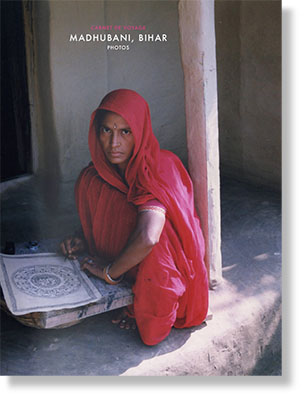
Gauri’s direct involvement in women’s issues started in the ‘70s, when she began assisting German anthropologist and folklorist Erika Moser and American Fulbright Scholar Raymond Lee Owens in their research on the Mithila art. She began working on the historiography of the art, exploring its social dimensions and tracing the antiquity of some of the artforms to the Brahma Purana. By 1977, women artists from the area became her prime focus. She founded the Master Craftsmen’s Association of Mithila in partnership with Owens to put an end to the exploitation of impoverished, struggling artists by middle-men. The association provided a platform to eminent women artists like Jagdamba Devi, Sita Devi, Ganga Devi, Maha Sundari Devi, Bauwa Devi, Yamuna Devi, Shanti Devi, Chano Devi, Lalita Devi, Shashikala Devi, Leela Devi, sikki artist Bindeshwari Devi, paper-mache artist Chandrakala Devi and sujani artist Karpoori Devi. It encouraged them to combat the patriarchal gaze with their artwork. Young artists like Rani Jha were encouraged to introduce avant garde feminist themes in their pictorial vocabulary.
> read more
Celebrating six decades of Jogen Chowdhury's works

Source Millennium Post
Art Critic, curator and poet Ranjit Hoskote who also curated this show said, "Reverie and Reality' traces a retrospective arc across Jogen Chowdhury's oeuvre, from the mid-1950s to the present – a period that coincides with our history as an independent nation, with all its crises, anxieties, hopes and dreams. We have brought together nearly 200 works, spanning diverse phases of the artist's work, and spanning several medium including oils, water colour, graphite and charcoal drawings, lithographs, pastels, mixed media work, and book illustration.
> read more
dimanche 22 septembre 2019
Warli tribe: 'We are India's soul, don't kill us'
Source BBC
Rajesh Wangad's tribe has used art to tell their stories for generations, living in harmony with the natural world around them. But this way of life in western India is at threat of being wiped out forever. So, using a combination of ancient skills and modern technology, he is fighting to save his home and art from being swept away by India's rapid modernisation. This film is based on his artwork and his story.
> read more
mardi 10 septembre 2019
Nikhil Chopra: Artist in Residence at The Metropolitan Museum of Art

Source The Telegraph by Smita Tripathi
Beginning Thursday, September 12, Goa-based performance artist Nikhil Chopra will present a 9-day performance at The Metropolitan Museum of Art, New York. For nine consecutive days, Chopra will live within the Museum as he presents his performance titled, Lands, Waters, Skies. Chopra, who is the 2019-20 Artist in Residence at the Met, is the first artist in the Museum’s 150 year history to actually live within the museum for any duration of time. 45-year-old Chopra who completed his Masters from Ohio University in the US, has done nearly 50 performance works across the globe over the past 15 years. We chatted with Chopra about his upcoming performance, his love for the art, and his audience.
> read more
The Isabella Stewart Gardner Museum’s Fall Exhibition Include Bharti Kher and Dayanita Singh

Source India New England
This October, the Isabella Stewart Gardner Museum will open In the Company of Artists: 25 Years of Artists-in-Residence, an exhibition celebrating the Museum’s legacy of inviting artists to live at the Museum, explore the collection, and create new works inspired by their experience. The exhibition will feature work from dynamic Artists-in-Residence including Sophie Calle, Bharti Kher, Luisa Lambri, Laura Owens, Rachel Perry, Dayanita Singh, and Su-Mei Tse. In selecting the seven women artists for the exhibition, the Museum recognizes and furthers the legacy of its founder—a woman with a bold creative spirit, who championed the artists of her own time. In the Company of Artists will be on view in the Museum’s Hostetter Gallery from Oct. 17, 2019 to Jan. 20, 2020.
> read more
mardi 3 septembre 2019
This Photographer Captures the Last Living Tribes of India

Source Vice by Meera Navlakha
In a way, Chotani’s photographs shed light on these communities that are often ignored by the larger Indian population. According to the last nationwide census in India conducted in 2011, indigenous people and scheduled tribes make up 8.6 percent of the country’s population, which is around 104 million people. This is the largest indigenous population of any country in the world. Still, the rights of these tribes are often a contentious point in Indian politics and society. Amnesty International has long advocated for Adivasi rights, empowering the communities and making sure they are protected.
> read more
lundi 26 août 2019
Where I Work: Ratheesh T.

Source India Art Fair
I always make art at night, it’s the best time for me. I start at 11pm and continue working until 5am! On some days, I don’t work at all. I do normal things, like eat, watch television, laze around, go for long walks, and chat with friends. I’m still always thinking about work, though. I take time away from the canvas to develop thoughts and ideas by observing life around me. Painting is just a way to understand these thoughts and share them with the world. I live alone and don’t follow a strict routine. My main problem is that my lifestyle makes it hard to spend time with others. I like to think of myself as a lone bear, remote from society. I do not plan my life. So talking about where I see myself going has always been difficult. I don’t know what the future holds for me at all!
> read more
Adjaye Associates To Design Kiran Nadar New Cultural Centre In New Delhi India

Source Harper's Bazaar Arabia by Ayesha Sohail Shehmir Shaikh
Inspired by the geometry of mountains and trees, Adjaye Associates was selected for their Veil of Triangles concept, described as “dancing and timeless” by the jury. Adjaye has previously designed the Smithsonian Institution’s National Museum of African American History and Culture building in Washington, D.C, claiming the Stirling Prize jury award in 2018 for excellence in architecture. “As a practice we are elated and honoured to win this competition,” said Adjaye. “I first came to India many years ago and immediately felt a profound connection with the life and energy. The new building will foster public interest in contemporary art, culture and creative partnerships, and enable Kiran Nadar Museum of Art to continue their pursuit of engaging younger audiences and future generations with one of the finest and most diverse collections of Indian Modern and contemporary art.”
> read more
dimanche 25 août 2019
How an institute can become a public platform for art and artists

Source Financial Express by Faizal Khan
Early 2001, a theatre company from Germany landed in Delhi to stage Bertolt Brecht’s The Resistable Rise of Arturo Ui.
Written while he was in Chicago after fleeing from Hitler, Brecht had replaced the Nazi leader with Chicago’s mafia don Al Capone in the 1941 play to warn the world about the danger of fascism. After witnessing two world wars in the previous century, it was a fitting thought by the Max Mueller Bhavan, the well-respected German cultural institution in Delhi, to herald the new century with a Brechtian idea. But nature had other plans. A devastating earthquake struck Gujarat on January 26, 2001, casting a pall of gloom over the whole of India. Though bringing a Brecht play to India involved months of planning and mind boggling logistics like a planeload of paraphernalia, the Max Mueller Bhavan donated all gate collections to the earthquake relief fund. Nearly two decades later, the institute is ready to rewrite its role making a cultural institution more relevant today than ever before as the Max Mueller Bhavans in Delhi and Kolkata celebrate the 60th anniversary this year.
> read more
vendredi 23 août 2019
Francis Newton Souza — The ‘enfant terrible’ of Modern Indian Art

Source Christie's by Nishad Avari
For the first six years in Europe, his first wife Maria was the sole breadwinner for the family, while Souza struggled to support himself financially with his art through the occasional exhibition and commission, and through his journalism. As well as being a talented painter, Souza was a remarkable writer, publishing his semi-autobiographical essay in the book Words and Lines in July 1959. The year 1954 saw Souza on the brink of defeat. By 1955, however, the tide had turned. He penned his autobiographical essay, Nirvana of a Maggot, which was published by his friend, the poet and influential editor Stephen Spender, in Encounter magazine; exhibited three paintings at the recently opened Institute of Contemporary Arts alongside works by Francis Bacon and Henry Moore, among others; and painted many of his most iconic works, such as Birth, which currently holds the world auction record for the artist at $4,085,000. It was also the year of Souza’s first solo exhibition at Victor Musgrave’s Gallery One, which together with New Vision Centre, Signals and Indica, played an important role in defining London as a centre for radical artistic expression. Souza’s show was a triumph — he won patrons as well as acclaim from key art critics of the time, including Edwin Mullins and David Sylvester, who likened the expressionistic nature of his art to that of Graham Sutherland and Francis Bacon. It’s not surprising that there were affinities between Souza and Bacon, particularly in their depictions of the grotesque, observes Avari: ‘They shared models, such as Henrietta Moraes, and would hang out together at the Colony Club in Soho.’ By the end of the year Souza was considered among the most exciting painters in the city. Almost a decade of success and patronage followed.
> read more
mercredi 21 août 2019
New York: Christie’s is all set to celebrate 25 years of art curation
Source Architectural Digest by Uma Nair
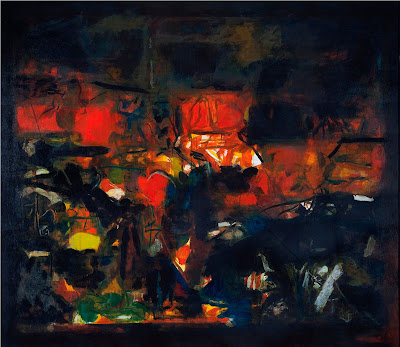
Market studies clearly show that for two decades Christie’s has commanded 70% of the market share for South Asian Modern + Contemporary Art in 2018. Eight of the top ten auction prices in the category have been achieved at Christie’s. Results in sale reflect that between 1994 and 2005, Christie’s sold approximately $20 million of South Asian Modern + Contemporary Art, while between 2005 and 2018 sales in the category surpassed $400 million. Selling rates in New York achieved over 90% by lot in March 2019, and a year earlier the New York sale established the highest price for the category when Tapovan by abstract master Syed Haider Raza sold for $4.45 million.
> read more
mercredi 14 août 2019
Antilia, la folie de Mukesh Ambani

Source Les Echos par Tristan Gaston-Breton
Les six premiers étages peuvent abriter 200 voitures, dont les 168 véhicules de collection appartenant au maître des lieux. Un atelier de réparation - avec ses mécaniciens - et une station-service ont même été prévus. Quatre autres étages sont entièrement occupés par des jardins suspendus et un encore par un hôpital privé équipé du matériel le plus récent. Le bâtiment abrite également quatre piscines - dont une olympique -, un spa et un centre de « fitness » dernière génération, une salle à manger copiée sur celle d'un grand hôtel new-yorkais, une salle de réception et de bal, une dizaine de salons, un théâtre de 50 places, une salle de cinéma avec écran géant, un temple privé, et trois héliports aménagés sur le toit !
> lire plus
mardi 13 août 2019
See Inside India’s Opulent New Sculpture Park in a 19th-Century Palace

Source Artsy by Alina Cohen
About four miles from the center of Jaipur, in northwest India, Nahargarh Fort rises from the scrub-studded hills. Madhavendra Palace peers out from inside the stone fortress walls, its 19th century architecture rhyming with the ornate, pastel architecture for which the city is famous—30 minutes away, the Hawa Mahal, an apricot-hued, layer cake of a building attracts tourists and photographers year round. In December 2017, Madhavendra Palace itself became a major destination when it opened as India’s first contemporary sculpture park.
> read more
samedi 10 août 2019
From Gandhi to the UN: Indian artist weaves story of destruction and rebirth in Hong Kong show

Source South China Morning Post by Enid Tsui
They will see themselves becoming one of the crowd.
There are a number of large paintings filled with many small figures and animals. Indian art history, especially Mughal miniatures, seep into his work just as his parents, friends and former teachers do, he says. He often paints the figures and animals in a grid-like, orderly arrangement but something always disrupts the surface tranquillity. This is true of Come Give Us A Speech (2008) – a series of panels that show all kinds of people and a few deities sitting in plastic chairs – where plumes of black smoke cover parts of the painting. That work is accompanied by Gathering is Evil (2007), in which the only figure is a large, black skeleton against a background of empty, ghostly chairs.
> read more
mardi 6 août 2019
Art Exhibition: Canopy for Conservation

Source Outlook India by Nayanika Mukherjee
The deity Baradeo sits on a lotus leaf, when the idea of Creation dawns on him. He looks around, but water spreads till the edge of the horizon. He rubs his chest with pensive intent, and fashions a crow from the grime. It flies far in search of clay to further Creation, until tiredly landing atop a stump. But this is no tree—it is the claw of a mystical crab, who reveals where all the clay has gone. A giant earthworm in the nether world collects and feasts on it. The crab pulls him out of this damp abode, and forces the worm to spit out the clay. The crow quickly grabs it, and flies home. With a spiderweb woven atop the watery expanse, Baradeo fashions the Earth’s creatures from this clay. If Indian creation myths are your cup of tea, Gond legends are a quirky starting point for the inquisitive. As one of our largest and oldest tribes, their folklore is intricate and imaginative.
> read more
mercredi 24 juillet 2019
Mumbai: Chemould Prescott Road brings to life the second edition of Modus Operandi

Source Architectural Digest by Arya Chatterjee
The show embarks on creating a journey for inexperienced collectors, young or old, to buy great works of contemporary art at affordable prices. According to Gandhy, who has an eye for Indian contemporary art, some of the works featured in this exhibition were discovered after rummaging through artists’ stock rooms. A few were especially created for the show. “An artist’s studio is a sacred space not accessible to all, a place where they pursue all their inspirations. I have had the privilege of exploring these spaces and have always come out enriched and inspired by the work that I have seen,” she says. To evoke the same sense of excitement and awe for the viewer, Gandhy hopes to bridge this gap, bringing to light the process of evolution that each artist goes through in creating a work of art. Bringing something from the studios of all the featured artists—mood boards, drawing books, worktables, chairs, photographs to sculptures—Gandhy turns the gallery into a montage of various studios. The show is truly a mixture of the creative chaos that is an artist’s mind.
> read more
lundi 22 juillet 2019
With Jean Pigozzi's contemporary African art donation, MoMA to become a 'leader' in the field

Source The Art Newspaper by Nancy Kenney
The Museum of Modern Art (MoMA) announced today that the collector and photographer Jean Pigozzi was donating a “transformative” gift of 45 works of contemporary African art to the museum, positioning MoMA to become a “unique institutional leader” in the field. Glenn D. Lowry, the museum’s director, said in a statement that the gift would play an important role in the ambitious re-installation of MoMA’s permanent collection, which is taking shape as the institution prepares to reopen on 21 October in expanded galleries. The museum has cast the rehanging as an opportunity to rethink the entire history of Modern and contemporary art, highlighting and juxtaposing artists of more diverse backgrounds and geographic origins.
> read more
samedi 20 juillet 2019
It is extremely urgent that the Indian art community reaches out to local audiences: Shanay Jhaveri

Source The Hindustan Times by Srishti Jha
In April 2016, I joined The Metropolitan Museum of Art as its first incumbent curator for Modern and Contemporary art from South Asia and immediately proposed Mukherjee’s show. The Museum’s Modern and Contemporary department under the leadership of Sheena Wagstaff has been committed to reconsidering a received art history. This has manifested in our exhibition programme as well as our collecting approach. The Met Breuer was inaugurated with a solo show of Nasreen Mohamedi and since then Modern and Contemporary Art from South Asia has been consistently represented at the Museum. Mohamedi set the pace and spirit for the programme. I felt that Mukherjee would be the right artist to follow Mohamedi, with a solo retrospective at The Met Breuer; they are two artists occupying the furthest ends of the artistic spectrum in their visual idiom, particularly in relation to the breadth of the modernity projects cultivated and nurtured in and through Baroda.
> read more
vendredi 19 juillet 2019
Non-stop Rain Room at Sharjah Art Foundation

Source Indian Blooms
The Rain Room is an unusual and evocative experience for visitors who will enjoy the sound and nearby feel of being in the rain without getting wet. When visitors enter the room, they are directed to navigate intuitively and carefully through the dark underground space in order to protect themselves from the downpour. As the visitors walk through the room, which uses 1,200 liters of self-cleaning, recycled water, their movements trigger motion sensors that pauses the rainfall when detecting movement. Founded in 2005, Random International is a London-based collaborative studio for experimental and digital practice within contemporary art. Their work, which includes sculpture, performance and large-scale architectural installations, reflects the relationship between man and machine and centres on audience interaction.
> read more
dimanche 14 juillet 2019
On Ravinder Reddy’s first one-man exhibition in Kolkata

Source The Hindu by Soumitra Das
The gopurams or pyramidal towers of South Indian temples bristle with thousands of figures of deities. Rural deities or grama devatas, occasionally stark naked, are the guardians of villages in Tamil Nadu and Andhra Pradesh. G. Ravinder Reddy strips these figures of their divinity and turns them into icons of working women of our times, transformed in his imagination into empowered goddesses who can hold their own, irrespective of class and social status.
> read more
samedi 13 juillet 2019
Delhi art lovers do not miss out on this exhibition at Kiran Nadar Museum of Art

Source The New Indian Express
If you haven’t caught the big fat retrospective exhibition of one of India’s leading woman contemporary artists, Arpita Singh at Kiran Nadar Museum of Art (DLF South Court Mall, Saket), you have till July 14. About 180 works by the 82-year-old Delhi-based artist have been curated by Roobina Karode in the show titled Submergence: In the Midst of Here and There. Singh who hails from Baranagar in Kolkata, graduated with a Diploma in Fine Arts from Delhi Polytechnic in 1959. In 1972, she had her first solo exhibition at Kunika Chemould Gallery, New Delhi.
> read more
vendredi 12 juillet 2019
A Tribal Tradition Under Threat

Source Raw Vision by Deidi von Schaewen
The Adivasi tradition of house painting is centuries old; some say, it is rooted in prehistoric rock art. Passed from generation to generation, mothers and aunts to daughters and nieces, the practice occurs across the region’s different tribes, such as the Oraons, Santals, Mundas, Ganjs and Kurmis. There are a dozen or so different styles of house painting, but within those styles the murals are personal to the tribe and to the artist, variations even occurring from house to house. The Adivasi consider their homes to be sacred, and daubing their walls with art is an expression of faith, identity, culture, pride, family, love, thanks and more.
> read more
mardi 9 juillet 2019
Indian Art and Culture: The book ‘A Conjuror’s Archive’ pays an ode to artist Jangarh Singh Shyam

Source Architectural Digest by Avantika Shankar
Jangarh would recreate the world of the stories he grew up with—a world so distant from the modernist art school he was studying in—and in that sense, created a contemporaneity of his own. “Modernism cannot be confined to certain movements in modernism,” muses Dr. Jain, “He has also done a couple of autobiographical works—tribal artists don’t do that. Where would you place this interaction? It is a kind of modernity. His marginalisation, his coming away from the tradition to which he belonged, his recreating that entire world of imagination…to surpass all other art school-trained artists who were around him…” Dr. Jain explains. “There are modern artists who continue to do what they’re doing, in some way or the other, and that isn’t innovation.” Jangarh Singh, on the other hand, was perpetually throwing himself into new forms—from using poster colours for the first time at age 18 to using architectural forms as his canvas—and the continued relevance of his work is a testament to his revolutionary mind. “If modernity comes from being open to new things, imbibing them in your work…” Dr. Jain says, “I think he was able to do that all the time.”
> read more
dimanche 7 juillet 2019
Prabhakar Barwe, the Jacques Derrida of Indian modernism

Source National Herald by Vibha Galhotra
In the scorching heat of Delhi, while all seemed grumpy and dull, walking into the National Gallery of Modern Art (NGMA) changed the pace of my day. The cool breeze of the gallery along with the experience of space, colour, form and poetry, as I entered the retrospective exhibition ‘Astitva: The Essence of Prabhakar Barwe,’ brought back a different sense of fulfillment. A forgotten hero of modernist, pre-contemporary art movement in India, Prabhakar Barwe (1936 – 1995), was much ahead of his time and was widely appreciated by his peers and seniors for his unique sense of depiction and his concern with the language of painting rather than visual images and signs. Given his attention to detail, it goes without saying that Barwe was quite analytical of his work and constantly seeking deep meaning through experimentation with colour and form. His style and process somehow reminds me of the concept of deconstruction introduced by philosopher Jacques Derrida who explored the interplay between language and the construction of meaning in search of learning about the intended meaning or structural unity of a particular text. Similarly, Barwe was trying find newer realities created by abstracting an image from its real form. In one of his notes Barwe mentions, “The interplay between concrete and abstract is my prime preoccupation. It gives me immense pleasure to work on that meeting point to that thin line of demarcation, where abstraction meets the concrete or separates from it.”
> read more
Inscription à :
Articles (Atom)

 Articles