mercredi 20 avril 2022
Art Fair India 2022: Exhibitions to See
India Art Fair returns to New Delhi (28 April–1 May 2022) for its 13th edition this spring. Ocula Magazine selects exhibition highlights around the city, as well as those in Mumbai and Kolkata.
> read full article
vendredi 15 avril 2022
Horror and Hope: Shubigi Rao Documents the History of Book Destruction
There are bookish children, and there are bookish children of bookish parents with a fantastic library in which to lose oneself. Born in Mumbai in 1975, Rao spent part of her childhood in Darjeeling and the jungle outskirts of Kaladhungi, then a village in the foothills of the Himalayas. Access to her parents’ beloved library, described in Pulp I as composed of natural and political history, literature and travel, is one of her formative influences. But over time, it suffered several losses (robbery, termites) before being torn apart during her parents’ divorce, when she was a teen. So, while her subsequent research in library destruction around the world is a testament to a lifelong bibliomania, it also a way of processing personal loss.
> read more
jeudi 14 avril 2022
Nalini Malani’s Utopia
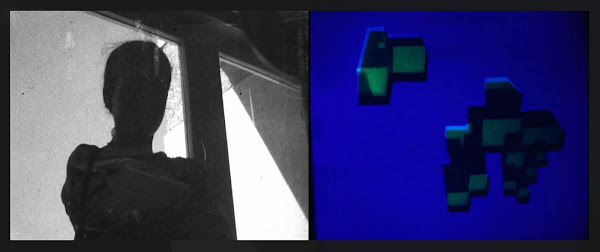
In the summer of 1969, Nalini Malani began to explore moving-image art making. A recent graduate of the J.J. School of Art in Bombay (now Mumbai), she was the youngest—and only female—participant in the legendary though short-lived Vision Exchange Workshop (VIEW), a Bombay artists’ hub founded by artist Akbar Padamsee. Malani’s first stop-motion animation film, Dream Houses, made at VIEW that same year, was inspired by utopian modern architecture—including the Indian architect Charles Correa’s plan for New Bombay (later known as Navi Mumbai, 1964), drawings of which are featured in the MoMA exhibition The Project of Independence: Architectures of Decolonization in South Asia, 1947–1985. Seven years later she paired Dream Houses with a new film to form a diptych, Utopia, which is currently on view at MoMA in Gallery 419.
> read more
lundi 11 avril 2022
Christie’s Asian Art Week Totals $67,890,084
Source Salon Privé Magazine
Christie’s Asian Art Week New York achieved a total of $67,890,084 with 83% sold by lot and 160% hammer above the low estimate. There was global participation with bidders from 33 countries across six continents. During the week three records were achieved and eleven lots exceeded $1 million across all sales. The top lot of Asian Art Week New York was an important and very rare inlaid bronze faceted jar, fanghu, which sold for $2,760,000, more than six times above its low estimate of $400,000. Additional notable results included Gathering of Scholars at the National Library (Dokseodang), 16th Century, circa 1531, which totaled $693,000; a bronze figure of dancing Krishna, which realized $693,000; a magnificent and extremely rare imperial famille rose-enameled glass snuff bottle of the Qianlong period, which achieved $693,000; and Bhupen Khakhar’s The Banyan Tree, from the prestigious collection of Mahinder and Sharad Tak, which realized $2,460,000. Tina Zonars, Co-Chairman of Asian Art, Christie’s, comments: “We are delighted by this week’s results, which demonstrate the strength and resilience of the Asian art market across all categories.
> read more
dimanche 10 avril 2022
The 6 best Indian art events to look forward to in 2022
After a sluggish start to the year, the Indian art world is thrumming back to life. There’s a spate of art and design galleries opening across the country, from Mumbai to Kolkata. Young artists are finding new audiences through group shows such as Immerse, curated by Shaleen Wadhwana and held at Mumbai’s Somaiya Vidyavihar University earlier this year. Instead of logging in to online viewing rooms, we're visiting galleries in person once more. And reflecting this renewed sense of enthusiasm is a jam-packed Indian art calendar. Bookended by the India Art Fair in April and the Kochi Muziris Biennale in December, there’s a host of openings, museum launches and exhibitions to look forward to in-between. Here’s what you shouldn’t miss.
> read more
vendredi 8 avril 2022
India Art Fair Announces Full Programme
India Art Fair has announced the full list of galleries and programming for its 13th edition, which takes place in Delhi from 28 April to 1 May 2022. Sixty five galleries will take part, including seven Indian galleries who are participating for the first time—APRE Art House, Art Incept, Gallery Art Exposure, Modern Art Gallery, Ojas Art, Terrain.art, and Vida Heydari Contemporary. They'll rub shoulders with fair stalwarts such as Experimenter, Jhaveri Contemporary, Vadehra Art Gallery, and Nature Morte, as well as 14 institutional participants, including the Kochi Biennale Foundation, Chennai Photo Biennale, and Serendipity Arts Foundation.
> read more
CAP TOWN : JUXTAPOSITIONS BY SHINE SHIVAN AND JANE ALEXANDER
What the gallery refers to as “idiosyncratic two-person exhibitions” is a new initiative by Stevenson to reintroduce the joy of art to viewers after two years of having to enjoy viewing through a screen and two years of “rapid regionalisation” after 15 years of “rapid internationalisation”. The first exhibition of this kind is Juxtapositions, an exhibition featuring works from Shine Shivan and Jane Alexander: “two artists from different continents working in different mediums whose work resonates in unexpected ways”. Indian artist Shine Shivan is known for his depiction of mythological figures and gods from Indian cultures while South African artist Jane Alexander sculptures portray figures of animals and mythical alterations.
jeudi 7 avril 2022
Tyeb Mehta painting makes record as second most expensive work of modern or contemporary art
Source The Indian Express by Benita Fernando
All eyes were set on a Raja Ravi Varma painting at Saffronart’s spring live auction on Wednesday evening, yet some others emerged as winners and personal bests. A Tyeb Mehta sold for $5,596,000 (Rs 41.97 cr), inclusive of buyer’s premium (hammer price $4,750,000). This is the highest selling work for the artist globally in an auction. Now, it’s the second most expensive work of modern or contemporary Indian art. Mehta’s Untitled (Bull on Rickshaw) (1999) is a meeting of some of his key motifs and themes—the falling figure, the trussed bull and the rickshaw. The bull writhes on the rickshaw, conveying a picture of vulnerability, suffering and bondage. Both human and animal are yoked to their respective places in life. As Amrita Jhaveri noted in A Guide to 101 Modern and Contemporary Indian Artists (2005), .”..the bull, with its fiery energy is inescapably doomed to man’s violence. Mehta’s experience at an abattoir in Bombay marked him indelibly; in his art, it achieves metaphoric significance — an animal in the throes of death becomes a symbol for the conflicts of modern life.”
> read more
samedi 2 avril 2022
The Surprising Mix of Tradition and Innovation in Nepal’s Contemporary Art Scene
Chitrakar took a sip of tea and looked at his current project: another massive painting, this time of the Buddha refusing to let his meditation be disturbed by swarms of tiny figures symbolizing the “defilements”: hatred, delusion, and greed. He told Anderson he believed that the defilements are not entirely evil. For example, Chitrakar explained that he uses the sense of pride he takes in his work as motivation to drive him to create more, to help more viewers catch a glimpse of true peace. Chitrakar’s reminder that nothing human is wholly good or evil applies to all the factors shaping the lives of Nepali contemporary artists. Tradition and innovation; global connections and local roots; meditation and marketing: all these can be tools for creating better lives and communities. The different solutions and goals of Chitrakar, Sadhu X, Bajracharya, and many others in Nepal show that there’s no one best path to the future of art.
> read more
vendredi 1 avril 2022
From Raja Ravi Varma to Tyeb Mehta, your chance to bid for some of India’s finest art
Two masters interpreting the same scene of Draupadi’s vastraharan from The Mahabharata; the strong socio-political commentary that defines the iconography of a trussed bull on a rickshaw; the cross-pollination between rural and urban Bengali society in Kalighat’s patachitra paintings—Mumbai-based gallery Saffronart’s Spring Auctions 2022 will feature masterpieces that span geographical diversity, cultural context and showcase the talent of some of the most distinguished names in modern and contemporary South Asian art. The live auction will be held on 6 April featuring 55 important works by modern masters. It will be followed by an online auction on April 6 and 7.
> read more
jeudi 3 mars 2022
l'enfance dans la collection agnès b.
Nous sommes heureux de vous annoncer la présence de Chano Devi dans la nouvelle expositon d'agnès b. présentant la quatrième saison de sa collection à La Fab. dédiée à l'enfance. "Tous les grands ont été petits." Cette phrase, chère à agnès, révèle l’importance que revête l’enfance dans sa vie, un intérêt que l’on trouve tout naturellement dans les oeuvres de sa collection. "J’ai toujours vécu avec des enfants. J’aime les voir grandir, se construire, les écouter… Ils me surprennent toujours, m’obligent à me poser en permanence de nouvelles questions. Rien n’est jamais acquis ni évident pour eux. Leur inquiétude m'émeut." agnès b. Avec ce quatrième accrochage, agnès nous invite à suivre son regard qui se pose avec tendresse sur "ces gens en train de se faire".
see more
mercredi 2 mars 2022
New MoMA exhibition reflects on South Asian architecture marking decolonization
This is also Stierli’s hope—“I would say there are three key takeaways. First, that post-Independence architects in South Asia were active agents in articulating a vision of social progress for their post-Independence societies”. In doing so—Stierli underlines—they also provided a blueprint for how modern architecture could serve as an agent of decolonization across the global South in the decades to come. “Secondly, what we have here is a unique body of work of extraordinary aesthetic and architectural quality and historical significance that forces us to rethink and recalibrate the ways in which the history of modern architecture has been told, mainly from a Western and Eurocentric point of view”. And last, but not the least, there lies the awareness for the precarious state in which modern architecture finds itself in, in different parts of the world—“Our exhibition hopes to raise awareness of the need to preserve this unique legacy and the bold societal vision it embodies.”
> read more
samedi 29 janvier 2022
The Man Who Took Gond Art From Tribal Huts to The World’s Top Museums
Source The Better India by Surekha Kadapa-Bose
An image of Lord Hanuman was drawn with lime and charcoal by hand on the humble red mud walls of a small hut in the remote village, Patangarh, of Dindori district of Madhya Pradesh in 1981. The artist was 17-year-old Gond Pradhan boy Jangarh Singh Shyam. The simplicity, the clean lines and the innocence of the figure helped catapult the hitherto confined Gond tribal art and the artist onto the national and international art circuit. That was the year when the government of Madhya Pradesh planned to build a multi-purpose art centre, Bharat Bhavan, in its capital city Bhopal. Contemporary and well-known artist Jagdish Swaminathan was given the responsibility of establishing the centre where both urban and rural (folk and tribal) arts could be displayed. While scouring the villages of MP for tribal art, he saw the drawing of Lord Hanuman on the walls of a tribal home. That’s when he discovered the uninfluenced talent of Jangarh Shyam and brought him to Bhopal with the promise of work in the field he loved. Thus began the saga of Gond art coming out of villages to the mainstream. Swaminathan took it upon himself to introduce the young Jangarh to canvas and acrylic paints. The rest as they say is history. Without losing touch with his tribal roots or focus, the highly gifted boy soon learnt the new medium. His work, from being displayed on the walls of tribal huts, buffalo backs or kuccha roads, received a new stage in the galleries of Japan, the UK, Germany, France and the USA.
> read more
In a Celebration of Craftsmanship, Dior Haute Couture Spotlights Indian Artists Madhvi and Manu Parekh
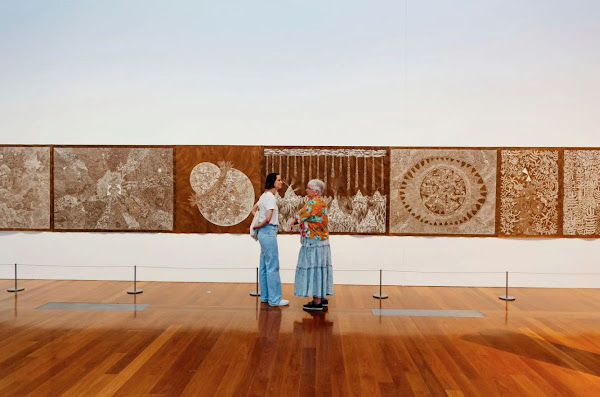
With her spring-summer 2022 haute couture collection for Dior, creative director Maria Grazia Chiuri is paying homage to the art of hand craftsmanship. Embroidery has been elevated from a decorative detail to a “three-dimensional conceptual act,” as it says in a statement from the brand, giving everything from silver lamé jacquard dresses to draped leotards and tights an avant-garde architecture by way of embellishment. It has also informed the large-scale, handcrafted textile panels that framed the collection’s presentation this week inside Paris’s Musée Rodin, where they will remain on display through Sunday (January 30), featuring works by renowned Indian artists Madhvi and Manu Parekh.
> read more
mardi 25 janvier 2022
Dior Couture Printemps-Été 2022: Ode à l’art du fil, Madhvi Parekh
C’est au coeur des jardins du musée Rodin que le célèbre cube Dior se dresse. Les guests sont invités à découvrir une galerie d’art aux mille et une broderies. Le décor multicolore, brodé par des jeunes femmes indiennes issues des ateliers Chanakya et de la Chanakya School of Craft, reproduit des oeuvres du couple d’artistes indiens, Madhvi Parekh et Manu Parekh. C’est une véritable ode à la création sous toutes ses coutures, un dialogue entre les arts. « La vision collective de cette collaboration a permis de créer une expérience immersive qui célèbre la culture artisanale, et tout ce qui peut nous relier à l’autre. Cette collaboration avec les artistes vise à effacer la séparation entre l’art et l’artisanat. Elle raconte leur histoire d’amour et nous montre comment l’un influence l’autre de manière authentique. » explique Karishma Swali des ateliers Chanakya. À travers cet atelier revisité, la directrice artistique des collections féminines souhaite conjuguer l’art et l’artisanat, le savoir-faire et la force créative. Ainsi, en collaborant avec les artistes indiens, Madhvi Parekh et Manu Parekh, Maria Grazia Chiuri met en valeur non pas la dichotomie masculin/féminin dans son opposition, mais dans sa complémentarité.
> read more
vendredi 7 janvier 2022
Brothers from Warli tribe to show local art at exhibition in Mumbai today
Mayur and Tushar Vayeda used to travel for six hours everyday from their hometown in Palghar district to reach Mumbai to study there. Belonging to the Warli tribe of Ganjad village, their travel to their college showed them the “balance that existed between a traditional and modern life in India”. The experiences are captured in their paintings made in the distinctive Warli style which is art using white lines on a base made of cow dung. The brothers, who have received much fame around the world via exhibitions at the Setouchi Triennale in Japan and the Asia-Pacific Triennial of Contemporary Art, will be making their debut in Mumbai at Artisans’ Centre in Kala Ghoda today. The painting, titled “Our City: Regenerating Hope”, presents a sustainable idea of progress. “This is the future of Mumbai. We are trying to show hope,” Mayur said. “Sea turbines co-exist with an abundance of marine fauna — a different reality from the several infrastructure projects that are currently destroying coastal ecosystems in the city. It’s a philosophy borrowed from the Warli way of life, central to which are sustainable farming, co-existence with nature, and the worship of nature deities,” he added. Mayur and Tushar taught themselves to paint and like many others in their tribe, they also work as farmers and bee-keepers. > read more
dimanche 26 décembre 2021
Maximilano Modesti and Hervé Perdriolle are bringing emerging Indian artists to Brussels
Some projects take a while to come together. They call for quiet deliberation and impassioned conversations till they’re ready to take shape, and they’re all the better for it. For AD contributing editor Maximiliano Modesti and art critic and curator Hervé Perdriolle, it was much the same. They first met in 2012 at the India Art Fair in New Delhi, and soon discovered their shared passion for emerging Indian artists. When they both left for Brussels, a few years apart, the idea of opening a gallery started to brew.
> read more
lundi 20 décembre 2021
MAP's latest show traces the trajectory of Indian photography
It has been a rather busy December for the Museum of Art and Photography (MAP), Bengaluru. Earlier this month, it hosted Art Is Life: SoundFrames, in collaboration with the US’ Berklee College of Music, to celebrate music and its power to bring people together. And now an exhibition of photographs from its collection is being showcased at the Monash Gallery of Art (MGA) in Melbourne, Australia, as part of Visions Of India: From The Colonial To The Contemporary. Curated by Nathaniel Gaskell, writer and director of the MAP Academy, it is the first major survey of Indian photography in Australia.
> read more
vendredi 17 décembre 2021
At the Asia Pacific Triennial, Universal Concerns Are Personal
Since the early 1990s, the Asia Pacific Triennial of Contemporary Art (APT) has reshaped the way that art from the region is presented. APT's inception signalled a departure from the Bjelke-Petersen era in Queensland, which was defined by conservatism, cronyism, and corruption. The demise of premier Sir Johannes Bjelke-Petersen coincided with reforms to Australian foreign policy under Foreign Minister Gareth Evans, who in 1989 called for a 'cultural relations' approach to regional security. Produced by a committee of curators and partner organisations throughout the Asia Pacific since its inception, APT is distinct from other recurrent international exhibition series as it operates without an overarching theme. This year's tenth edition (4 December 2021–25 April 2022) is no different. With a curatorial team of 15 headed by Tarun Nagesh and Reuben Keehan, 69 projects by 150 artists presented across the Queensland Art Gallery and Gallery of Modern Art interrogate traditions and technologies, both old and new, while countering a Covid-related increase in digital reliance with an emphasis on tactility. (Mayur and Tushar Vayeda, Dhartari: The creation of the world, 2021. Exhibition view: The 10th Asia Pacific Triennial of Contemporary Art, Queensland Art Gallery | Gallery of Modern Art, Brisbane.)
> read more
mardi 14 décembre 2021
‘Chitra Ganesh: Dreaming in Multiverse’
The Mildred Lane Kemper Art Museum at Washington University in St. Louis will present the first solo exhibition in the Midwest by Brooklyn, N.Y.-based artist Chitra Ganesh. In her multidisciplinary practice, Ganesh draws on Buddhist and Hindu iconography, science fiction, queer theory, comics, Surrealism, Bollywood posters and video games, combining them with her own imagery to present speculative visions of society in the past, present and future. “Chitra Ganesh: Dreaming in Multiverse” reflects the artist’s commitment to making worlds that are tethered to culture and history, yet unbound from the limitations of contemporary reality. At the Kemper Art Museum, Ganesh will exhibit 13 digital prints that together comprise the artist’s “Multiverse Dreaming” suite, as well as a selection of her video animations. The exhibition will be on view Feb. 18 through July 25, 2022.
> read more
mardi 7 décembre 2021
samedi 4 décembre 2021
Traditional art forms are fighting back in the Asia Pacific region
Source The Art Newspaper by
The 10th Asia Pacific Triennial in Brisbane explores connections between people and place—and the encroaching danger of climate change. Among the 150 artists and collectives participating in APT10 are brothers Mayur and Tushar Vayeda, who were born and still live in the village of Ganjad, 80 miles from Mumbai in India. They make art in the style of their Warli tribe-—a kind of pictorial language featuring geometric human figures against a background of lush, stylised vegetation and natural formations. The brothers paint traditional fables, as well as stories they gathered by recording local oral histories, using water-based paints on a ground made of the dung of their own cattle. One of their works, Dhartari: The creation of the world 2021, has been acquired by QAGOMA.
> read more
mardi 30 novembre 2021
Events : Mohanjeet Grewal, pionnière de la mode indienne à Paris, a habillé les stars, de Bardot à Fonda
samedi 20 novembre 2021
FN Souza, six others fetch over ₹42 crore at Pundole's auction
Source Mint by Varuni Khosla
NEW DELHI : Over eight pieces of art work have sold for close to ₹30 crore at the Pundole's The Fine Art Sale this week in Mumbai. In a dynamic saleroom at the gallery in Hamilton House, the anticipated sale of 83 lots from the collections of Nandlal Bandhopadhyay and others sold for about ₹42.68 crore hammer price, excluding commissions and taxes, surpassing the gallery's expected high estimate of ₹24.09 crore. A total of 81 of the 83 lots on offer were sold. Francis Newton Souza’s Couple - a seminal work from the artist’s oeuvre - from 1964 fetched ₹7 crore at the auction. Akbar Padamsee’s Grey Nude from 1960 from a private collection in Mumbai fetched ₹4 crore, exceeding its pre-sale estimate of ₹1.5-2.5 crore. Mallika Sagar, a specialist in Modern and Contemporary Indian art and Pundole's auctioneer, said they saw strong bidding across a range of artists and new world auction records were set for several as well. "We were also fortunate to have a superlative group of NS Bendre's, representing some of the strongest works to come in to the market," she said.
> read more
samedi 9 octobre 2021
India’s Art World Has Suffered, and Thrived, in the Pandemic
Amrita Jhaveri gently jokes that she was rescued by a Bollywood star. When the actress Sonam Kapoor Ahuja, a client of Ms. Jhaveri’s art gallery, approached her in the summer of 2020 to ask if she would like to use Ms. Kapoor Ahuja’s London office as something of an exhibition space, Ms. Jhaveri was intrigued. “She said, ‘I have this space, you can use the walls as you like,’” said Ms. Jhaveri, who is based in London but who, like Ms. Kapoor Ahuja, used to travel back to India frequently (she and her sister own Jhaveri Contemporary, in Mumbai). The three-floor office, recently featured on the cover of Architectural Digest India, is now adorned with the works of artists represented by the gallery, which will have a booth at Frieze London this week and will take part in “Unworlding,” a curated section at the fair.
> read more
Archives revue de presse
-
▼
2026
(40)
-
▼
août
(9)
- India On Paper: Priya Paul's Love Letter To Bazaar...
- Nilima Sheikh 'Fractured Skies' MoMA NY Sep 27, 20...
- What’s next for South Asian art? Christie’s Damian...
- “ We are not part of nature. We are nature ”
- Indian Gallerist Sundaram Tagore Credits Friendshi...
- Discover online 27 years of passion for contempora...
- Christie’s Kiran Nadar exhibition offers unique pa...
- Contemporary Now 2026 turns Chennai into a city-wi...
- Unbound Forms at the Hepworth: how Indian and Bang...
-
▼
août
(9)