Source New York Times by Somini Sengupta
Still, the summit faced its share of typically Indian challenges. One dealer kept a worried eye on a tangle of electrical cables buried under the carpet. Ms. Kirpal had to get the 10 domes of the exhibition hall covered with waterproof sheeting at the last minute. And thugs threatened the exhibition of India’s most famous painter, M.F. Husain; the Hindu right has for years railed against Mr. Husain for his representations of Hindu goddesses in the nude. Ms. Kirpal agreed to put up his works, then, fearing attacks, ordered them taken down, but was again persuaded to let them be mounted. By then Mr. Husain’s defenders had publicly criticized fair organizers.
> read more
lundi 31 janvier 2011
In India, a Busy Fair and a Spirited Art Scene


samedi 29 janvier 2011
Rahul Gandhi felicitates Warli artist
Source MSN News
For AICC general secretary Rahul Gandhi, it was a chance today to fulfill a promise that was made by his late grandmother and former Prime Minister Indira Gandhi in 1976 to grant land to an artist who had impressed her. During his whirlwind tour of tribal Thane district as part of his three-day Maharashtra visit, Rahul felicitated Warli painter and Padma Shri winner Jivya Soma Mashe.
> read more
Full speed ahead at the India Art Summit
Source Financial Times by Jan Dalley
It seemed, however, that the extra press attention was hardly necessary. The four days of the event, which is now in its third edition, attracted an astonishing 128,000 visitors to the 84 galleries, roughly equivalent to the footfall at Frieze and Art Basel Miami Beach put together. Even allowing for the fact that, whether it’s a bus or a birthday party, there are always more people in India, this figure seemed to amaze everyone, even the organisers. “This shows,” Kirpal tells me, “that people are thirsty for art. Some had never even been to a gallery before.”
> read more
vendredi 28 janvier 2011
Mumbai wallah's curated guide to New Delhi

Source CNN by Himali Singh Soin
The sky in New Delhi seems as whitewashed as its bungalows, its sunsets are muted and its monuments silhouetted. But this façade is exactly what makes New Delhi a literary and imaginative experiment. There is a haze that veils every surface: culturally, socially and topographically. The first way to ride above or below the immediate surface is on the Metro. It glistens with the pride of a new house on Diwali, and makes up, in honesty and efficiency, for the disillusionment that came with the administration of the Commonwealth Games. So Mumbaiwallahs in Dilli for the India Art Summit or on their way to the Jaipur Literature Festival, here's a ride through New Delhi's culture corners: Connaught Place, Lodhi Road and Hauz Khas Village.
> read more
Tribal art is out, contemporary non-metropolitan art is in
Source TimeOut Mumbai by Deepanjana Pal
This fortnight, the city’s two oldest galleries attempt to reintroduce Mumbai’s art lovers to what Hoskote calls “the third field” or “contemporary non-metropolitan art”. This combination of urban, contemporary, personal and traditional motifs or styles makes the contemporary non-metropolitan artists exciting for viewers and those who are speculating about the next big thing of Indian art. Unlike their urban counterparts, non-metropolitan artists have as their foundation an informal but rigorous training in the techniques they use in their paintings. If they are able to absorb newer influences and incorporate them into the existing artistic language in a way that retains their distinctive styles, these artists may well become the toast of Indian contemporary art.
> read more
Summit Kind of Wonderful

Source Artforum by Zehra Jumabhoy
I guessed that this year’s India Art Summit was going to be an intimidating event. I was wrong. In fact, the building’s severe Soviet-style architecture formed a counterpoint to the hedonist revelry within. Alcohol flowed freely (quite literally: cocktails were on the house), and celebrities appeared high on art—or each other. Theorist Homi Bhabha paraded around with his pal, Anish Kapoor, who rubbed sharp-suited shoulders with superstar Indian artists: Subodh Gupta, Bharti Kher, Vivan Sundaram, and Gigi Scaria (whose work will show up in India’s Pavilion at the next Venice Biennale). The omnipresent Hans Ulrich Obrist dashed about (presumably in preparation for the KHOJ Marathon he was hosting on day two). Sheena Wagstaff of the Tate Modern fraternized with art historian Geeta Kapur (diligently wielding her walking stick). Every once in a while someone bumped into the armed security guards “protecting” M.F. Husain’s controversial paintings.
> read more
jeudi 27 janvier 2011
Nude artist 'taking a break'

Source The Straits Times by Yip Wai Yee
The Indian artist who caused a stir at the inaugural art fair at the Marina Bay Sands Exhibition and Convention Centre by stripping naked has stopped his attention-getting act. The artist, Mr T. Venkanna, who sat on a bench in the nude and took pictures with visitors, was not in the booth on Friday. Some newspapers had gone to town with the Hyderabad artist's act at Art Stage Singapore, questioning whether it could be considered art. A lawyer was quoted as saying the show could be against the law as it is an offence to appear nude in public. The art fair, which opened to the public on Thursday, is considered a public event. The exposure proved to be too much for some people. On Friday morning, Gallery Maskara's owner, Mr Abhay Maskara, told The Straits Times over the phone that the gallery was asked to stop the performance. He did not say who advised him to do so. He said: 'It is always a bit disheartening when works of art are not seen as art. We did not set out to create any controversy.' Mr Venkanna had sat behind a black curtain and a sign was posted in front of the booth, warning viewers of the content and restricting viewers to those who are 21 years and older.
> read more

A tale of two Indias: Here, the twain meet
Source The Times of India
That there are two Indias has been accepted for long, with the dichotomy only getting accentuated over the years. Rarely do the twain meet in the art world, with exhibitions essentially whitecube affairs where the wineswilling crowd gathers to nibble on delectable hors d'oeuvres and savour the growing value of its investments. A new show that opened in the capital today attempts to bring down the barriers. Titled 'Yeh Image Mahaan: India Meets Bharat' , the exhibition at Lalit Kala Akademi's new basement gallery hangs pop imagery and tribal art on the same wall.
> read more
L’art contemporain à l’honneur à New Delhi
Source Aujourd'hui l'Inde par Antoine Guinard
La troisième édition de la foire indienne d’art contemporain s’est achevé dimanche dans la capitale. Après le succès de l’année dernière, l’évènement monte en puissance avec notamment un intérêt grandissant de galeries étrangères. Artistes, galeristes, collectionneurs et simple amateurs d’art s’affairent depuis jeudi à Pragati Maidan, parc des expositions de New Delhi, où se tient jusqu’à dimanche le troisième India Art Summit (IAS), la plus grosse foire d’art contemporain d’Inde. 50 galeries indiennes et une trentaine de galeries étrangères y exposent les œuvres d’artistes du monde entier. Des plus célèbres, comme Picasso, Matisse, Dali ou encore les indiens F.N. Souza et Subhod Gupta, aux jeunes artistes encore inconnus, indiens et étrangers.
> lire plus
Jivya Soma Mashe célébré à l'occasion du 61ème Independence Day

Source Net India
Kapila Vatsyayan, ardente activiste pour la promotion des arts indiens, et Jivya Soma Mashe, le légendaire artiste de la tribu Warli, font partie des 13 personnalités indiennes sélectionnées pour recevoir la seconde récompense honorifique la plus importante, le "Padma Vibhushan", remise par le premier ministre à l'occasion du 61éme anniversaire de l'Indépendance. Prix précédemment reçu par l'astrophysicien Jayant Narlikar et le Prix Nobel de physique Subrahmanyan Chandrasekhar.
> read more
India needs more world class art institutions
Source Livemint by Anindita Ghose
When we started our dedicated Chinese contemporary art sales in 2004, the auctions were generating around $6 million. In 2010, the sale totals for our Chinese art auctions are around $196 million. This is phenomenal when compared to India which has gone from around $2 million to $20 million in the same period... Countries such as China, and even Russia, have had a tremendous state investment in cultural infrastructure such as museums that India doesn’t. The average Indian art buyer isn’t very eager or well informed. The ball is rolling now, but it’ll still take 5-10 years to catch up. And that’s a conservative estimate.
> read full article
Bridging the gap
Source The Hindu by Shailaja Tripathi
Bringing the two Indias together and celebrating the differences and a tumultuous relationship between the two is Kolkata-based Cima Gallery's exhibition “Yeh Image Mahaan: India Meets Bharat”. In its first ever outing at the India Art Summit, the gallery has brought in a bunch of art pieces which harmoniously combine indigenous practices with the popular visual language of the subcontinent.
> read more
India's red-hot art scene

Source Global Post by Jason Overdorf
"With the Indian GDP booming and the number of Indian millionaires on the rise, a section of the international galleries are interested in exploring the potential of promoting their program to the Indian collector base," said Arvind Vijaymohan, a consultant who advises art buyers. "The Art Summit is the most viable platform in the current context for anyone interested in connecting with Indian collectors."
> read more

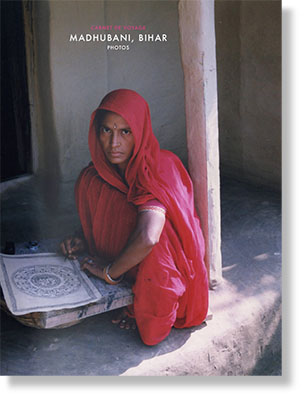
Padmashree for Mahasundari Devi: the fourth Padmashree for Mithila Painting

Source Bihar Days
Patna: among the list of awardees for the arts on the Republic day is Mahasundari Devi from Bihar who in her late eighties continues to train and transmit the art to the next generations. The story of how Mithila painting came into prominence is quite interesting and roundabout. Way back during the great earthquake of 1934 in Bihar, some British officers noted and copied samples of Mithila paintings they saw on the walls of Madhubani.
Congratulations and salute, Mahasundari Devi, from Bihardays and its readers!
> read more
Winter's Three Best Art Exhibitions In Museums Around The World

Source The Huffington Post by Edward Goldman
The Huffington Post posted on its website a list of the three best art exhibitions in museums around the world, prepared by the art critic Edward Goldman:
1. ‘Ensor and Contemporary Art’ in Ghent, Belgium
2. ‘Henry Moore, The Studio, Sculptures and Drawings’ at the Musée Rodin, Paris, France
3. Anish Kapoor: ‘Turning the World Upside Down’, at the Serpentine Gallery, London, UK
> read more
India Art Summit Triumphs Despite Fundamentalist Rage Over M.F. Husain

Source Art Info
The third edition of the India Art Summit ended Sunday and provided clear signs of a burgeoning Indian art market. Strong sales were reported and first-time buyers were abundant, although the fair's organizers were challenged by security issues, both expected and unexpected — including threats by Hindu nationalists against the work of controversial artist M.F. Husain — and a surprise visit by Sonia Gandhi.
> read more
"They Will Eventually Change the Art World": Hans Ulrich Obrist on India's Rising Art Scene

Source Art Info by Sahar Zaman
I would say Indian art is an incredible force in the international art scene today, with such great artists. It is very prolific, since India is not just about one city — there is good art coming out of all the big cities across India. Also, it's not just one generation of young artists. There's a strong history from the 1960s through the 90s right up to now. And it's easy to feel its international presence. I think collectively they will eventually change the art world... Like the sudden 16th-century shift from the Mediterranean to the Atlantic, this is a similar big shift, and there's going to be an ever-increasing dynamics in China, in India, and in the Middle East.
> read more
mercredi 26 janvier 2011

mardi 18 janvier 2011

The aesthetics of art
Source The Hindu by Suvasini Sridharan
India has such a tradition of tribal and folk art and artists in India are reinterpreting and giving it a contemporary. The future of art lies in design art where art, craft and design is blended to create an interactive form of art. Ideas of aesthetics seem to be changing and what is novel and has not been seen before is considered art.
> read more
lundi 17 janvier 2011
Modern-Day Medicis
Source Newsweek
With public art spaces struggling to survive, private patrons are filling the void by organizing exhibitions, often of their own collections. In India, arts patron Anupam Poddar has taken a similar hands-on role in sharing his collection with the public. The scion of a noted industrialist family, he has assembled, together with his mother, more than 5,000 pieces of Indian tribal, folk, and modernist art; contemporary pieces compose about 40 percent of the collection. In the fall of 2008, they inaugurated the Devi Art Foundation... As the first private museum for contemporary art in India, Devi serves as an institutional model for other arts patrons, and Poddar is hopeful that it will spark other similar projects.
> read more
samedi 15 janvier 2011

Singapour s'affirme en nouvelle capitale de l'art
Source Le Monde par Harry Bellet
Une foire d'art contemporain de plus ? Oui, mais pas n'importe où, et pas avec n'importe qui. Le Suisse Lorenzo Rudolf, par ailleurs un des animateurs d'Art Paris, vient de créer Art Stage Singapore, organisée du 12 au 16 janvier, à Singapour, qui pourrait bien, à terme, devenir l'un des centres du monde artistique.
> lire plus
Inscription à :
Articles (Atom)

 Articles