Source Life Style Asia by Akshita Nahar Jain
The biggest milestone coming up is the new Kiran Nadar Museum of Art (KNMA) stand-alone building designed by Ghanaian-British architect Sir David Adjaye. This state-of-the-art building will be located in the capital and will house our new museum and also a cultural centre. While this was unavoidably delayed due to the pandemic and subsequent lockdowns, we are now excited to proceed with our plans. In this new space, we hope to build upon our mission and expand it by providing a hub of creative education for all. The goal remains the same i.e. to make art more and more accessible and to make people more aware of its importance and the role it plays in shaping our society.
> read more
CONTEMPORARY ONE WORD SEVERAL WORLDS
vendredi 27 août 2021
jeudi 15 juillet 2021
Amrita Sher-Gil's Ladies' Enclosure set a new auction record
Source The Mint by Avantika Bhuyan
A rare Amrita Sher-Gil painting from her India period, painted just three years before her death, fetched ₹37.8 crore (US$ 5.14 million) at a Mumbai auction on Tuesday, making it the second-most expensive artwork by an Indian artist globally. The record-breaking sale of Sher-Gil’s seminal painting clearly indicates her artistic merit, said Dinesh Vazirani, chief executive and co-founder of Saffronart, which auctioned her painting. “The work highlights her growth and development as an artist and is a culmination of years of coming into her own as an artist of repute. It is, additionally, a rare work of the artist from that particular period to emerge in the art market, and we are honoured to have played a part in creating a new benchmark with this auction," Vazirani said. The Indo-Hungarian artist blended European and Indian styles in her work and captured the lives and experiences of women in early 20th century India. “Her paintings are lauded for their timeless themes and qualities that powerfully resonate with women’s narratives even today," notes a blog post on Saffronart, published on 8 July.
> read more
A rare Amrita Sher-Gil painting from her India period, painted just three years before her death, fetched ₹37.8 crore (US$ 5.14 million) at a Mumbai auction on Tuesday, making it the second-most expensive artwork by an Indian artist globally. The record-breaking sale of Sher-Gil’s seminal painting clearly indicates her artistic merit, said Dinesh Vazirani, chief executive and co-founder of Saffronart, which auctioned her painting. “The work highlights her growth and development as an artist and is a culmination of years of coming into her own as an artist of repute. It is, additionally, a rare work of the artist from that particular period to emerge in the art market, and we are honoured to have played a part in creating a new benchmark with this auction," Vazirani said. The Indo-Hungarian artist blended European and Indian styles in her work and captured the lives and experiences of women in early 20th century India. “Her paintings are lauded for their timeless themes and qualities that powerfully resonate with women’s narratives even today," notes a blog post on Saffronart, published on 8 July.
> read more
Shilpa Gupta and the art of infiltration
Source Architectural Digest by Anindita Ghose
Gupta’s works bore deep but there is a surface-level accessibility to them as well. “In terms of people receiving the work, it’s like keeping the door slightly ajar to start a possible conversation. Can there exist something only to trigger an emotion or a thought?” she asks. Her pundit-meets-punk aesthetic has spanned Advaita philosophy to guerilla performances where not just soap bars but white balloons with messages scrawled across may be handed to exhibition visitors and passersby who carry it into other worlds with them. For even where people cannot go, Gupta knows that art can infiltrate.
> read more
Gupta’s works bore deep but there is a surface-level accessibility to them as well. “In terms of people receiving the work, it’s like keeping the door slightly ajar to start a possible conversation. Can there exist something only to trigger an emotion or a thought?” she asks. Her pundit-meets-punk aesthetic has spanned Advaita philosophy to guerilla performances where not just soap bars but white balloons with messages scrawled across may be handed to exhibition visitors and passersby who carry it into other worlds with them. For even where people cannot go, Gupta knows that art can infiltrate.
> read more
dimanche 6 juin 2021
Rithika Merchant's interpretation of 'saudade'
Source Livemint by Avantika Bhuyan
In late 2019, artist Rithika Merchant began work on a new series themed on climate change. The idea was to explore how Earth changed after the advent of humans, and how this process has sped up in recent years. “The series looked at what we will be left with after the anthropocene/holocene, and what we can learn from the simpler times before,” says Merchant. Through 2020, the pandemic added another layer of meaning to the series, which was exhibited at TARQ, Mumbai, earlier this year. It got embedded with a certain longing for a not-so-distant past when life was “normal”. “I was in Mumbai when the nationwide lockdown was announced in March last year,” says the artist, who shuttles between Barcelona, Spain, and Mumbai. “I was staying with my parents and living in the bedroom in which I grew up. So one ended up ruminating over memories, and there was a yearning to be one with nature again.” This is when she created Saudade, a work inspired by the Portuguese word for deep longing and melancholia, as part of the series.
> read more
In late 2019, artist Rithika Merchant began work on a new series themed on climate change. The idea was to explore how Earth changed after the advent of humans, and how this process has sped up in recent years. “The series looked at what we will be left with after the anthropocene/holocene, and what we can learn from the simpler times before,” says Merchant. Through 2020, the pandemic added another layer of meaning to the series, which was exhibited at TARQ, Mumbai, earlier this year. It got embedded with a certain longing for a not-so-distant past when life was “normal”. “I was in Mumbai when the nationwide lockdown was announced in March last year,” says the artist, who shuttles between Barcelona, Spain, and Mumbai. “I was staying with my parents and living in the bedroom in which I grew up. So one ended up ruminating over memories, and there was a yearning to be one with nature again.” This is when she created Saudade, a work inspired by the Portuguese word for deep longing and melancholia, as part of the series.
> read more
samedi 22 mai 2021
Shilpa Gupta opens at Antwerp’s M HKA
Source The Hindu by Georgina Maddox
Now the M HKA (Museum of Contemporary Art, Antwerp) is showcasing her first mid-career survey exhibition, titled Today Will End. The exhibition looks at the evolution of her work over the last two decades, foregrounding the speculative nature of her practice as well as the depth of her critical engagement with psychology, behaviour, politics and language. It is curated by Nav Haq, the associate director of the museum, who has been following Gupta’s practice. “Ten years ago, Nav did my first UK institutional solo at the Arnolfini in Bristol. Later, when he curated the Göteborg International Biennial, he had shown the outdoor light work WheredoIendandyoubegin, on which he had titled his show,” says Gupta, who is busy setting up the show remotely from Mumbai, exchanging floor plans and photographs with the museum.
> read more
Now the M HKA (Museum of Contemporary Art, Antwerp) is showcasing her first mid-career survey exhibition, titled Today Will End. The exhibition looks at the evolution of her work over the last two decades, foregrounding the speculative nature of her practice as well as the depth of her critical engagement with psychology, behaviour, politics and language. It is curated by Nav Haq, the associate director of the museum, who has been following Gupta’s practice. “Ten years ago, Nav did my first UK institutional solo at the Arnolfini in Bristol. Later, when he curated the Göteborg International Biennial, he had shown the outdoor light work WheredoIendandyoubegin, on which he had titled his show,” says Gupta, who is busy setting up the show remotely from Mumbai, exchanging floor plans and photographs with the museum.
> read more
mercredi 19 mai 2021
How artist Avinash Karn uses Madhubani art to initiate dialogue on communal and caste divides in India
Source Firstpost by Shailaja Tripathi
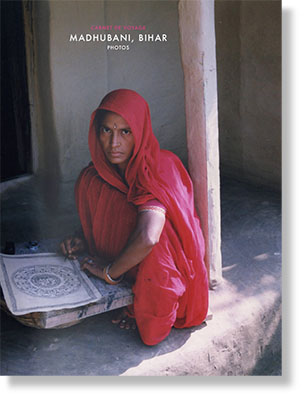
Mithila painting was once the domain of upper-caste artists. Over time, quite a few Dalit women artists also took to it and incorporated themes relevant to their lives. Dulaari Devi who belongs to the mallah community, was awarded the Padma Shri earlier this year. However, it is still not very usual for muslim women to learn Mithila painting. This makes this initiative compelling. “There are challenges for these girls to learn painting. It is not easy. One of them told me that the neighbours criticised when they took a painting home. I believe there are certain restrictions associated with painting but their parents are so supportive. That’s why I admire their guts, passion and commitment. The art form of Mithila needs such diverse perspectives,” states Karn. Apart from five muslim girls, two girls from the Hindu community — Premlata and Hemlata — are also part of the project.
> read more
Mithila painting was once the domain of upper-caste artists. Over time, quite a few Dalit women artists also took to it and incorporated themes relevant to their lives. Dulaari Devi who belongs to the mallah community, was awarded the Padma Shri earlier this year. However, it is still not very usual for muslim women to learn Mithila painting. This makes this initiative compelling. “There are challenges for these girls to learn painting. It is not easy. One of them told me that the neighbours criticised when they took a painting home. I believe there are certain restrictions associated with painting but their parents are so supportive. That’s why I admire their guts, passion and commitment. The art form of Mithila needs such diverse perspectives,” states Karn. Apart from five muslim girls, two girls from the Hindu community — Premlata and Hemlata — are also part of the project.
> read more
samedi 24 avril 2021
JANGARH SINGH SHYAM: THE GOND ART PIONEER WHO CREATED HIS OWN IDIOM, BUT LEFT THE WORLD TOO SOON
Source Abir Pothi by Shampa Shah
“Jangarh is no ordinary artist painting in any traditional manner or style. He is not just an icon maker. Inventive and innovative, he opens up vistas that perhaps have no parallel in Pardhan or Gond art. The Leela (playfulness) which Jangarh brings to his art is without parallel, yet it seems to belong to some submerged tradition.” — J. Swaminathan, The Perceiving Fingers. The first thing that rings in my mind when I think of Jangarh is his laughter — a peal of laughter in its most real sense, echoing exactly like the laughter with which the character of Mozart has been endowed in the film Amadeus. In the film, it was assigned the name ‘the laughter of God’. Jangarh’s, too, was the laughter of God, which unnerved you with its innocence and abandonment. It was the innocent laughter of a person unaware of the vagaries of life. The life of Jangarh Singh Shyam has been “the stuff dreams are made of”, to borrow from the essay Dream Children by Charles Lamb. His journey from his native village Patangarh, tucked away in the folds of undulating hills and forests, to the urban city of Bhopal, and from there to some of the biggest centres of art in the world has been fraught with excitement and fears. Durgabai Vyam, another very talented Pardhan painter, shared with me that in the village, before the discovery of his genius, womenfolk used to fondly call Jangarh ‘Kanva’ or crow, because of his wisdom and inquisitiveness. When Jangarh decided to leave the village and settle down in Bhopal, the women bidding him farewell cried, “To what unknown lands will your inquisitiveness take you dear Kanva? May you be blessed always.” Did the women of the village have a premonition of his overseas sojourns, bringing accolades and fame to the entire community, followed by his untimely demise in the faraway land of Japan?
> read more
“Jangarh is no ordinary artist painting in any traditional manner or style. He is not just an icon maker. Inventive and innovative, he opens up vistas that perhaps have no parallel in Pardhan or Gond art. The Leela (playfulness) which Jangarh brings to his art is without parallel, yet it seems to belong to some submerged tradition.” — J. Swaminathan, The Perceiving Fingers. The first thing that rings in my mind when I think of Jangarh is his laughter — a peal of laughter in its most real sense, echoing exactly like the laughter with which the character of Mozart has been endowed in the film Amadeus. In the film, it was assigned the name ‘the laughter of God’. Jangarh’s, too, was the laughter of God, which unnerved you with its innocence and abandonment. It was the innocent laughter of a person unaware of the vagaries of life. The life of Jangarh Singh Shyam has been “the stuff dreams are made of”, to borrow from the essay Dream Children by Charles Lamb. His journey from his native village Patangarh, tucked away in the folds of undulating hills and forests, to the urban city of Bhopal, and from there to some of the biggest centres of art in the world has been fraught with excitement and fears. Durgabai Vyam, another very talented Pardhan painter, shared with me that in the village, before the discovery of his genius, womenfolk used to fondly call Jangarh ‘Kanva’ or crow, because of his wisdom and inquisitiveness. When Jangarh decided to leave the village and settle down in Bhopal, the women bidding him farewell cried, “To what unknown lands will your inquisitiveness take you dear Kanva? May you be blessed always.” Did the women of the village have a premonition of his overseas sojourns, bringing accolades and fame to the entire community, followed by his untimely demise in the faraway land of Japan?
> read more
jeudi 22 avril 2021
How galleries, intellectuals, and patrons have shaped contemporary Indian art
Source Art Basel by Kanika Anand
India is a country rich with history, and its heady mix of colors and sounds, tastes and appetites, positions and compositions are embedded in the country’s cultural landscape. But despite the plethora of diverse artistic practices, a new generation of forward-thinking curators, and platforms with an international reach, such as India Art Fair, Kochi-Muziris Biennale, and Serendipity Arts Festival, the contemporary art ecosystem in India is largely still overlooked by the state. Adequate infrastructure to support public institutions and artists through funding opportunities like grants and awards has not appeared. Consequently, a handful of patrons-turned-gallerists have expanded their roles beyond their conventional scope and become the bedrock of the contemporary Indian art scene.
> read more
India is a country rich with history, and its heady mix of colors and sounds, tastes and appetites, positions and compositions are embedded in the country’s cultural landscape. But despite the plethora of diverse artistic practices, a new generation of forward-thinking curators, and platforms with an international reach, such as India Art Fair, Kochi-Muziris Biennale, and Serendipity Arts Festival, the contemporary art ecosystem in India is largely still overlooked by the state. Adequate infrastructure to support public institutions and artists through funding opportunities like grants and awards has not appeared. Consequently, a handful of patrons-turned-gallerists have expanded their roles beyond their conventional scope and become the bedrock of the contemporary Indian art scene.
> read more
mercredi 21 avril 2021
Those invisible women who labour over kantha quilts
Source MintLounge by Somak Ghoshal
The desire to mend, repair and reuse is intrinsic to human nature, though that may be hard to believe in this age of disposable living. Archaeologists have found needles among the ruins of the Harappan civilisation, a discovery that imbues the familiar act of sewing with an aura of distinction. The ongoing online exhibition, Painted Stitches, Woven Stories, organised by the Museum of Art & Photography (MAP), headquartered in Bengaluru, intends to draw our attention to the alchemy of thread and needle, the poetry spawned by their conjunction, and the layers of memory and meaning these seemingly everyday materials can produce. Yet, even as the world becomes increasingly alert to the richness of what is still seen as an artisanal tradition (though major auction houses now regularly have heirloom textiles and tapestries in their lots), the original creators, inheritors and preservers of these quilting traditions are far from getting their dues. Let alone any acknowledgement of their name on the work they make, most of these women are not even given basic minimum wages for their labour, partly due to the informal and unorganised nature of their work and partly due to the snobbery of the art-historical and commercial establishments. Until the latter shift their focus from redundant debates on the merit of ‘art’ versus ‘craft’, the invisibility of the subcontinent’s quilt makers is unlikely to diminish. MAP’s current effort is a step towards not only making the creations of these invisible women widely visible but also the labour that goes into bringing these objects to life.
> read more
The desire to mend, repair and reuse is intrinsic to human nature, though that may be hard to believe in this age of disposable living. Archaeologists have found needles among the ruins of the Harappan civilisation, a discovery that imbues the familiar act of sewing with an aura of distinction. The ongoing online exhibition, Painted Stitches, Woven Stories, organised by the Museum of Art & Photography (MAP), headquartered in Bengaluru, intends to draw our attention to the alchemy of thread and needle, the poetry spawned by their conjunction, and the layers of memory and meaning these seemingly everyday materials can produce. Yet, even as the world becomes increasingly alert to the richness of what is still seen as an artisanal tradition (though major auction houses now regularly have heirloom textiles and tapestries in their lots), the original creators, inheritors and preservers of these quilting traditions are far from getting their dues. Let alone any acknowledgement of their name on the work they make, most of these women are not even given basic minimum wages for their labour, partly due to the informal and unorganised nature of their work and partly due to the snobbery of the art-historical and commercial establishments. Until the latter shift their focus from redundant debates on the merit of ‘art’ versus ‘craft’, the invisibility of the subcontinent’s quilt makers is unlikely to diminish. MAP’s current effort is a step towards not only making the creations of these invisible women widely visible but also the labour that goes into bringing these objects to life.
> read more
vendredi 26 mars 2021
In new SH Raza biography, Yashodhara Dalmia shines a fresh light on the iconic artist's life and work
Source Firstpost by Ankush Arora
One of the most successful artists of post-independence India, Sayed Haider Raza would have turned 100 next year. His birth centenary celebrations, launched by the Raza Foundation this year through exhibitions, etc, are an opportunity to ask an important question about his legacy: how do we re-interpret his life and art as we reach the anniversary milestone? This question can be expanded further: how do we read his work in the 21st century, especially in an era of radically transforming styles and methods of art production and exhibition-making? One way of responding to this question is to re-contextualise his work, especially his spiritually loaded Bindu vocabulary, in our present times of social and political crises. For example, in a recent exhibition of Raza’s geometric works at Akar Prakar, New Delhi, the curator and author Ranjit Hoskote interpreted the artist’s paintings as a point of symbolic return in the midst of widespread displacement and migration: In an epoch of displacement and migration, many of us are homeless under the sky. How do we find our way back to the consolation that Raza’s Neelambar offers, the blue mantle of the cosmos? In Raza’s late paintings, insistently, we find ourselves returned to the point of origin, Aarambh, and the process of descending into the world, Avtaran.
> read more
One of the most successful artists of post-independence India, Sayed Haider Raza would have turned 100 next year. His birth centenary celebrations, launched by the Raza Foundation this year through exhibitions, etc, are an opportunity to ask an important question about his legacy: how do we re-interpret his life and art as we reach the anniversary milestone? This question can be expanded further: how do we read his work in the 21st century, especially in an era of radically transforming styles and methods of art production and exhibition-making? One way of responding to this question is to re-contextualise his work, especially his spiritually loaded Bindu vocabulary, in our present times of social and political crises. For example, in a recent exhibition of Raza’s geometric works at Akar Prakar, New Delhi, the curator and author Ranjit Hoskote interpreted the artist’s paintings as a point of symbolic return in the midst of widespread displacement and migration: In an epoch of displacement and migration, many of us are homeless under the sky. How do we find our way back to the consolation that Raza’s Neelambar offers, the blue mantle of the cosmos? In Raza’s late paintings, insistently, we find ourselves returned to the point of origin, Aarambh, and the process of descending into the world, Avtaran.
> read more
Sudarshan Shetty: challenging limits through art
Source Artchitectural Digest by Anindita Ghose
Sudarshan Shetty, 60, is one of the first Indians to wear the tag of “conceptual artist”. He is also among the most political, though in his characteristically measured way. In 2019, two days after some of his curated exhibits were barred from viewing at the Serendipity Arts Festival in Goa, allegedly for oblique references to the Citizenship (Amendment) Act (CAA) and proposed National Register of Citizens (NRC) protests, Shetty issued an impassioned statement about the need for art spaces to function freely. “As far as the show I curated is concerned, why (should) a caption saying an artwork could not reach on time for the exhibition due to transportation delays (because of) CAA protests in the northeast be a problem,” his statement said. Over a call from his home in Mumbai, Shetty spoke about why it is important for artists to register their protest, the function of art, and a return to painting after 12 years.
> read more
Sudarshan Shetty, 60, is one of the first Indians to wear the tag of “conceptual artist”. He is also among the most political, though in his characteristically measured way. In 2019, two days after some of his curated exhibits were barred from viewing at the Serendipity Arts Festival in Goa, allegedly for oblique references to the Citizenship (Amendment) Act (CAA) and proposed National Register of Citizens (NRC) protests, Shetty issued an impassioned statement about the need for art spaces to function freely. “As far as the show I curated is concerned, why (should) a caption saying an artwork could not reach on time for the exhibition due to transportation delays (because of) CAA protests in the northeast be a problem,” his statement said. Over a call from his home in Mumbai, Shetty spoke about why it is important for artists to register their protest, the function of art, and a return to painting after 12 years.
> read more
jeudi 25 mars 2021
Art Basel OVR: Two Indian art galleries make a splash at the special digital presentation
Source Architectural Digest by Shweta Vepa Vyas
Even as we find ourselves in the midst of a pandemic, art has found a way to endure, like it always does. In the brave new world of 2021, where social distancing and a virtual life is the norm, art too has gone digital. Art Basel's latest edition OVR: Pioneers—that brings together 100 galleries from 25 countries opens virtually with a 24-hour VIP preview that took place yesterday, and runs up until 27th March. Vadehra Art Gallery and Experimenter Gallery bear the honour of being the only two Indian galleries participating in the event. AD spoke to Roshini Vadehra, Director, Vadehra Art Gallery and Priyanka and Prateek Raja, founders, Experimenter Gallery on their respective presentations for the event.
> read more
Even as we find ourselves in the midst of a pandemic, art has found a way to endure, like it always does. In the brave new world of 2021, where social distancing and a virtual life is the norm, art too has gone digital. Art Basel's latest edition OVR: Pioneers—that brings together 100 galleries from 25 countries opens virtually with a 24-hour VIP preview that took place yesterday, and runs up until 27th March. Vadehra Art Gallery and Experimenter Gallery bear the honour of being the only two Indian galleries participating in the event. AD spoke to Roshini Vadehra, Director, Vadehra Art Gallery and Priyanka and Prateek Raja, founders, Experimenter Gallery on their respective presentations for the event.
> read more
samedi 20 mars 2021
Gaitonde breaks Indian art auction record—again—but Amrita Sher-Gil painting falls flat in uneven South Asian sales
Source The Art Newspaper by Kabir Jhala
A work by Vasudeo S. Gaitonde has, once again, broken the record for an Indian artist at auction after his 1961 painting from the collection of the dancer Aditi Mangaldas made £3.9m ($5.4m with fees) at SaffronArt in Mumbai. This comes just six months after he last made this record. Records were set for seven artists, several of whom, such as Sunayani Devi and Manishi Dey, come from the Bengal School. Interest from art historians and institutions in this early 20th-century group of Indian nationalist artists has surged in the past decade, with prices steadily rising in tandem.
> read more
A work by Vasudeo S. Gaitonde has, once again, broken the record for an Indian artist at auction after his 1961 painting from the collection of the dancer Aditi Mangaldas made £3.9m ($5.4m with fees) at SaffronArt in Mumbai. This comes just six months after he last made this record. Records were set for seven artists, several of whom, such as Sunayani Devi and Manishi Dey, come from the Bengal School. Interest from art historians and institutions in this early 20th-century group of Indian nationalist artists has surged in the past decade, with prices steadily rising in tandem.
> read more
lundi 15 mars 2021
'Marg' art magazine: The trailblazer at 75
Source The New Indian Express by Soumitra Das
For any magazine to have survived 75 long years is a huge achievement. Even more so, when it is a niche magazine like Marg devoted to art. The magazine takes a holistic view of art embracing architecture, photography, sociology, heritage, textiles and archaeology, latest developments in research, besides reviews of exhibitions, photography, books, cinema and what have you. And at this juncture, when the media is desperately trying to keep itself oxygenated, Marg Sanskrit for pathway has taken the bold decision to set off in a new direction by presenting a streamlined look (it has shrunk) with an austere cover that is a far cry from the feast for the eyes that it was in its original avatar. In the editorial of the first issue, Mulk Raj Anand (1905-2004), the magazine’s founder-editor, inspired by Mahatma Gandhi as he was, wrote he sought “…a true synthesis between the lasting values of our past heritage and finest impulses of the new modern civilisation…”
> read more
For any magazine to have survived 75 long years is a huge achievement. Even more so, when it is a niche magazine like Marg devoted to art. The magazine takes a holistic view of art embracing architecture, photography, sociology, heritage, textiles and archaeology, latest developments in research, besides reviews of exhibitions, photography, books, cinema and what have you. And at this juncture, when the media is desperately trying to keep itself oxygenated, Marg Sanskrit for pathway has taken the bold decision to set off in a new direction by presenting a streamlined look (it has shrunk) with an austere cover that is a far cry from the feast for the eyes that it was in its original avatar. In the editorial of the first issue, Mulk Raj Anand (1905-2004), the magazine’s founder-editor, inspired by Mahatma Gandhi as he was, wrote he sought “…a true synthesis between the lasting values of our past heritage and finest impulses of the new modern civilisation…”
> read more
dimanche 14 mars 2021
Coming back home: The art of Mayur and Tushar Vayeda
Source The Hindu by Anusua Mukherjee
Mayur (29) and Tushar (33) belong to the indigenous Warli community of Maharashtra. They grew up and live in the village of Ganjad, surrounded by ancient trees, rushing rivers and the wall paintings that are an inextricable part of their tribal culture. Warli art is not just an art form but a way of life. Going back centuries, when human life and nature were still conjoined, it is an outgrowth of nature, with its geometric patterns representing the sun, moon, mountains and trees. Man and his possessions, like the house, are placed within this schema, suggesting that human life gains meaning only in relation to nature. Mayur says, “Our childhood was full of adventure — we would go hunting, fishing, swimming in the river night and day. That part of our lives somehow still survives and is expressed in all the stories we draw on canvas.” /.../ While individuals usually migrate from the countryside to the city to find success, Mayur and Tushar have decided to stay back in Ganjad. Mayur explains their decision: “In the course of our travels, we had the opportunity to talk to a researcher who was studying the effect of pollution on the Pacific coral reefs. We learnt how the corals are getting bleached due to rising sea temperatures and how plastic waste has been found even in the Mariana Trench, the deepest point of earth. All that shook us. How do we change this, we wondered. We decided to start the process of conservation from our own village.”
> read more
Mayur (29) and Tushar (33) belong to the indigenous Warli community of Maharashtra. They grew up and live in the village of Ganjad, surrounded by ancient trees, rushing rivers and the wall paintings that are an inextricable part of their tribal culture. Warli art is not just an art form but a way of life. Going back centuries, when human life and nature were still conjoined, it is an outgrowth of nature, with its geometric patterns representing the sun, moon, mountains and trees. Man and his possessions, like the house, are placed within this schema, suggesting that human life gains meaning only in relation to nature. Mayur says, “Our childhood was full of adventure — we would go hunting, fishing, swimming in the river night and day. That part of our lives somehow still survives and is expressed in all the stories we draw on canvas.” /.../ While individuals usually migrate from the countryside to the city to find success, Mayur and Tushar have decided to stay back in Ganjad. Mayur explains their decision: “In the course of our travels, we had the opportunity to talk to a researcher who was studying the effect of pollution on the Pacific coral reefs. We learnt how the corals are getting bleached due to rising sea temperatures and how plastic waste has been found even in the Mariana Trench, the deepest point of earth. All that shook us. How do we change this, we wondered. We decided to start the process of conservation from our own village.”
> read more
Christie's upcoming sale to paint a web of stories
Source Livemint by Avantika Bhuyan
“Did I tell you about my Hindu friend? Imagine that her sister has been at the Beaux-Arts for two years and is very talented and very knowledgeable. So when she saw me, she went crazy about my hair and absolutely wanted to do my portrait with my hair loose. As it was for a competition and she had very little time, I posed almost non-stop for three days, and that’s why I couldn’t write to you as I had promised you.” This was a letter written by art writer and critic, Denyse Proutaux to her boyfriend Philippe Dyvorne in November 1931 about Amrita Sher-Gil. She became friends with the artist and her sister Indira during their stay in Paris between 1929 and 1934.
> read more
“Did I tell you about my Hindu friend? Imagine that her sister has been at the Beaux-Arts for two years and is very talented and very knowledgeable. So when she saw me, she went crazy about my hair and absolutely wanted to do my portrait with my hair loose. As it was for a competition and she had very little time, I posed almost non-stop for three days, and that’s why I couldn’t write to you as I had promised you.” This was a letter written by art writer and critic, Denyse Proutaux to her boyfriend Philippe Dyvorne in November 1931 about Amrita Sher-Gil. She became friends with the artist and her sister Indira during their stay in Paris between 1929 and 1934.
> read more
vendredi 5 mars 2021
Almost 90 Years Out of Public Eye, Rediscovered Portrait by Indian Modernist Amrita Sher-Gil Heads to Auction
Source ArtNews by Angelica Villa
Hungarian-Indian painter Amrita Sher-Gil was one of India’s foremost modern artists, even though her career was tragically cut short when she died in 1941 at the age of 28. Because the volume of her output was relatively modest, few works by Sher-Gil ever come to market, but now Christie’s will sell a rarely seen portrait by the artist later this month. Being sold during the house’s South Asian modern and contemporary art sale in New York on March 17, the artwork, which has been out of the public eye for almost 90 years, is expected to fetch a price of $2.8 million, the portrait. The subject of the portrait is Sher-Gil’s close friend art critic Denyse Prouteaux, whom she met while studying in Paris at the École des Beaux-Arts in Paris. The work is thought to have been executed around 1932, when Sher-Gil was just 19-years-old.
> read more
Hungarian-Indian painter Amrita Sher-Gil was one of India’s foremost modern artists, even though her career was tragically cut short when she died in 1941 at the age of 28. Because the volume of her output was relatively modest, few works by Sher-Gil ever come to market, but now Christie’s will sell a rarely seen portrait by the artist later this month. Being sold during the house’s South Asian modern and contemporary art sale in New York on March 17, the artwork, which has been out of the public eye for almost 90 years, is expected to fetch a price of $2.8 million, the portrait. The subject of the portrait is Sher-Gil’s close friend art critic Denyse Prouteaux, whom she met while studying in Paris at the École des Beaux-Arts in Paris. The work is thought to have been executed around 1932, when Sher-Gil was just 19-years-old.
> read more
vendredi 19 février 2021
Kiran Nadar Museum of Art presents ‘An Auteur’s Palette’ – week long online festival of Amit Dutta’s films
Source APN News
Meandering at a restful pace through the vastness of artistic forms and expressions, Amit Dutta’s roving eye cajoles the viewer to accompany him on his search for luminosity. It soon becomes evident that the liminal scatter of light often journeys through space and time, beyond the ‘hashiya’, the margins of a miniature painting’s mise-en-scene into the wider landscapes of Kangra valley, and then sometimes into the privy studios of veteran artists –interspersed with biographical testimonies and anecdotes. Each film by him then becomes like a tavern, a sarai, where you halt and observe the theatrics of characters, lived and imagined of various hues and temperaments. In an arguably auteur-esque manner, Dutta claims the vision of an artiste-genealogist himself, proliferating each frame with his own reflections.
> read more
Meandering at a restful pace through the vastness of artistic forms and expressions, Amit Dutta’s roving eye cajoles the viewer to accompany him on his search for luminosity. It soon becomes evident that the liminal scatter of light often journeys through space and time, beyond the ‘hashiya’, the margins of a miniature painting’s mise-en-scene into the wider landscapes of Kangra valley, and then sometimes into the privy studios of veteran artists –interspersed with biographical testimonies and anecdotes. Each film by him then becomes like a tavern, a sarai, where you halt and observe the theatrics of characters, lived and imagined of various hues and temperaments. In an arguably auteur-esque manner, Dutta claims the vision of an artiste-genealogist himself, proliferating each frame with his own reflections.
> read more
mercredi 17 février 2021
Studio Visit: Textile Artist Sagarika Sundaram on Working in Silence and Seeking Out Felts From Around the Globe
Source ArtnetNews by Noor Brara
The on-the-rise artist, who showed her works in a group show at Mana Contemporary last October, spent her early life bouncing back and forth between India and Dubai, during which time she’d gaze out the windows of planes, studying land formations in all their varying colors and shapes. Today, the images of those landscapes inspire her to create her own fabrics, which she produces by hand, on occasion working with a felt-making community in the lower Himalayas to gather regionally specific raw materials to fuse together textiles that suggest natural bodies like rivers, mountains, and valleys. Recently, Sundaram, who was featured on PBS’s Rising Artists program last fall and was recently shortlisted for the UC Berkeley South Asia Art Prize, spoke to Artnet about her process, her studio dosas, the stack of books on her nightstand, and more.
> read more
The on-the-rise artist, who showed her works in a group show at Mana Contemporary last October, spent her early life bouncing back and forth between India and Dubai, during which time she’d gaze out the windows of planes, studying land formations in all their varying colors and shapes. Today, the images of those landscapes inspire her to create her own fabrics, which she produces by hand, on occasion working with a felt-making community in the lower Himalayas to gather regionally specific raw materials to fuse together textiles that suggest natural bodies like rivers, mountains, and valleys. Recently, Sundaram, who was featured on PBS’s Rising Artists program last fall and was recently shortlisted for the UC Berkeley South Asia Art Prize, spoke to Artnet about her process, her studio dosas, the stack of books on her nightstand, and more.
> read more
dimanche 7 février 2021
Hit in Japan, Dahanu's Warli artists test Mumbai waters
Source Mid-Day by Jane Borges
If all goes as planned, the Vayeda brothers will be exhibiting their paintings at ARTISANS’ in Kala Ghoda in September this year. Radhi Parekh, founder-director of the gallery and store, who recently was in conversation with the duo during a virtual launch of the book, says, “As I see more and more of their paintings, I’ve come to realise that their work is very conceptual and transcendental. They have a bigger picture on their art, which leads to an abstraction, be it their subjects or their narration. What stands out [for me] is how pictographic Warli art is. They are constantly adding to the vocabulary and grammar of the art form, and this, without really abandoning its visual language. I think they have benefitted a lot from [seeing Warli art from a] distance, and the mentoring they’ve received from artists they have worked with in Japan. The finesse of their rendering is just superb. It’s a beautiful coming together of concept, technique, skill and execution. And therefore, their art is worth taking note of, as it develops.” She adds that though the Vayedas come from a place that is not too far away from Mumbai, “they’ve had their exhibitions everywhere, except here”. “In recent years, Warli art has been mired in [a lot of] commercialism, and has almost become imitative, because it’s a language that is so easy to learn. But, then you see the works of Tushar and Mayur, and you know this is different.”
> read more
If all goes as planned, the Vayeda brothers will be exhibiting their paintings at ARTISANS’ in Kala Ghoda in September this year. Radhi Parekh, founder-director of the gallery and store, who recently was in conversation with the duo during a virtual launch of the book, says, “As I see more and more of their paintings, I’ve come to realise that their work is very conceptual and transcendental. They have a bigger picture on their art, which leads to an abstraction, be it their subjects or their narration. What stands out [for me] is how pictographic Warli art is. They are constantly adding to the vocabulary and grammar of the art form, and this, without really abandoning its visual language. I think they have benefitted a lot from [seeing Warli art from a] distance, and the mentoring they’ve received from artists they have worked with in Japan. The finesse of their rendering is just superb. It’s a beautiful coming together of concept, technique, skill and execution. And therefore, their art is worth taking note of, as it develops.” She adds that though the Vayedas come from a place that is not too far away from Mumbai, “they’ve had their exhibitions everywhere, except here”. “In recent years, Warli art has been mired in [a lot of] commercialism, and has almost become imitative, because it’s a language that is so easy to learn. But, then you see the works of Tushar and Mayur, and you know this is different.”
> read more
vendredi 5 février 2021
Bhuri Bai: My Life as an Artist
Source Museum of Art & Photography Bangalore
Bhuri Bai's paintings are characterised by their lively visual vocabulary driven by an autobiographical and archival impulse, as she draws from her encounters with flora and fauna in the forests surrounding her village, motifs from traditional tattoos and her later experiences and travels as a contemporary artist. Narrated using her own words and paintings, combined with new research, this exhibition charts Bhuri Bai’s inspiring journey from growing up as a daily wage worker from a marginalised community to becoming a successful contemporary artist.
> read more
Bhuri Bai's paintings are characterised by their lively visual vocabulary driven by an autobiographical and archival impulse, as she draws from her encounters with flora and fauna in the forests surrounding her village, motifs from traditional tattoos and her later experiences and travels as a contemporary artist. Narrated using her own words and paintings, combined with new research, this exhibition charts Bhuri Bai’s inspiring journey from growing up as a daily wage worker from a marginalised community to becoming a successful contemporary artist.
> read more
mardi 2 février 2021
Mumbai: This exhibition focuses on the human body and its many aspects
Source Architectural Digest by Deepali Singh
In his curatorial note for Portraits of the Self—II, Mumbai-based Gallery Maskara's curatorial director Abhay Maskara writes, ‘Portraits of the Self—II places the human body in focus—revealing not only its strength and passion, but also its vulnerability and sensuality'. The exhibition includes paintings by Parag Sonarghare and sculptures made using found, reclaimed and recycled materials by Prashant Pandey. Larger-than-life portraits of male figures by Sonarghare are displayed side by side with Pandey's use of by-products of human activity in innovative ways. Maskara, who has previously showcased the works of both the artists, believes that just as conversation between people can be rich when differences are celebrated and embraced, so too in art. “Both Prashant and Parag have different concerns and use different materials and forms to express themselves yet they are connected in the way they push the boundary on conventional ways of seeing,” he says.
> read more
In his curatorial note for Portraits of the Self—II, Mumbai-based Gallery Maskara's curatorial director Abhay Maskara writes, ‘Portraits of the Self—II places the human body in focus—revealing not only its strength and passion, but also its vulnerability and sensuality'. The exhibition includes paintings by Parag Sonarghare and sculptures made using found, reclaimed and recycled materials by Prashant Pandey. Larger-than-life portraits of male figures by Sonarghare are displayed side by side with Pandey's use of by-products of human activity in innovative ways. Maskara, who has previously showcased the works of both the artists, believes that just as conversation between people can be rich when differences are celebrated and embraced, so too in art. “Both Prashant and Parag have different concerns and use different materials and forms to express themselves yet they are connected in the way they push the boundary on conventional ways of seeing,” he says.
> read more
jeudi 28 janvier 2021
Padma Shri Artist From Madhya Pradesh Once Worked As A Daily Wager, Earning Rs 6
Source The Better India by Gopi Karelia
Madhya Pradesh-based Bhuri Bai has experienced acute poverty first hand and has also worked as a child labourer just to be able to afford one square meal. When she was 10, her house was burnt down in a fire, so her family built a makeshift house from hay and lived there for years. She was a child bride and post-marriage survived on a meagre income of Rs 6 per day. When Bhuri finally found a breakthrough with Pithora painting, an enriched folk art, her Bhil tribe condemned her for it as women weren’t allowed to indulge in art forms. They even played the patriarchal card by suggesting her husband was not man enough to earn as much as Bhuri was earning through her paintings. However, the feisty Bhuri never let these adversities triumph over her innate talent and continued to move forward, using the skills of the ancient art. On 25 January, she reached the height of validation after receiving the prestigious Padma Shri for her contributions in preserving the traditional art form and taking it to the world stage. From Lucknow to London, Mumbai, Delhi, Hyderabad to the United States and the United Kingdom, her paintings have travelled far and wide.
> read more
Madhya Pradesh-based Bhuri Bai has experienced acute poverty first hand and has also worked as a child labourer just to be able to afford one square meal. When she was 10, her house was burnt down in a fire, so her family built a makeshift house from hay and lived there for years. She was a child bride and post-marriage survived on a meagre income of Rs 6 per day. When Bhuri finally found a breakthrough with Pithora painting, an enriched folk art, her Bhil tribe condemned her for it as women weren’t allowed to indulge in art forms. They even played the patriarchal card by suggesting her husband was not man enough to earn as much as Bhuri was earning through her paintings. However, the feisty Bhuri never let these adversities triumph over her innate talent and continued to move forward, using the skills of the ancient art. On 25 January, she reached the height of validation after receiving the prestigious Padma Shri for her contributions in preserving the traditional art form and taking it to the world stage. From Lucknow to London, Mumbai, Delhi, Hyderabad to the United States and the United Kingdom, her paintings have travelled far and wide.
> read more
mercredi 27 janvier 2021
Nicola Tarshito’s love affair with India continues to inform his artistic practice
Source Mint Lounge by Avantika Bhuyan
Nicola Strippoli first came to India from Italy in the 1980s after graduating from the Faculty of Architecture in Florence, with a thesis in street theatre. Like many others from the West, who came to the country in that period in search of enlightenment, he too headed to India on a spiritual quest. He ended up meeting a teacher, who taught him the use of meditation as a method of investigation and design, and also gave him the name Tarshito, meaning thirst for inner knowledge. In the course of his travels, he came across different folk traditions and sought to collaborate with its practitioners. Over time he has worked with 21 different traditional forms, and his engagement with four of these can be seen in Gallery Threshold’s ongoing showcase, India: Mirror of the Self, as part of the digital showcase, TAP 4x: India.
> read more
Nicola Strippoli first came to India from Italy in the 1980s after graduating from the Faculty of Architecture in Florence, with a thesis in street theatre. Like many others from the West, who came to the country in that period in search of enlightenment, he too headed to India on a spiritual quest. He ended up meeting a teacher, who taught him the use of meditation as a method of investigation and design, and also gave him the name Tarshito, meaning thirst for inner knowledge. In the course of his travels, he came across different folk traditions and sought to collaborate with its practitioners. Over time he has worked with 21 different traditional forms, and his engagement with four of these can be seen in Gallery Threshold’s ongoing showcase, India: Mirror of the Self, as part of the digital showcase, TAP 4x: India.
> read more
jeudi 21 janvier 2021
Sculptor Adip Dutta’s tribute to his mentor Meera Mukherjee
Source The Telegraph by Anannya Sarkar
Tracing back the journey and practice of artist and sculptor Adip Dutta and the influence of the late, revered artist Meera Mukherjee on his art through the unique relationship that he shared with his “Meera mashi” is Nestled, Experimenter’s latest exhibit at their Hindustan Road gallery space. Mukherjee’s practice of incorporating folk traditions and indigenous practices into her art finds place in the form of hand-embroidered works of kantha in this exhibition that are a product of her “constant push in imbibing and expanding processes juxtaposing them with Dutta’s works on paper, sculptures and drawings”. Dutta’s method of repetitive mark-making within his drawings establish a conversation between Mukherjee’s kantha works with the commonality between them spanning small lines, dots and dashes.
> read more
Tracing back the journey and practice of artist and sculptor Adip Dutta and the influence of the late, revered artist Meera Mukherjee on his art through the unique relationship that he shared with his “Meera mashi” is Nestled, Experimenter’s latest exhibit at their Hindustan Road gallery space. Mukherjee’s practice of incorporating folk traditions and indigenous practices into her art finds place in the form of hand-embroidered works of kantha in this exhibition that are a product of her “constant push in imbibing and expanding processes juxtaposing them with Dutta’s works on paper, sculptures and drawings”. Dutta’s method of repetitive mark-making within his drawings establish a conversation between Mukherjee’s kantha works with the commonality between them spanning small lines, dots and dashes.
> read more
Inscription à :
Articles (Atom)
Archives revue de presse
-
▼
2026
(40)
-
▼
août
(9)
- India On Paper: Priya Paul's Love Letter To Bazaar...
- Nilima Sheikh 'Fractured Skies' MoMA NY Sep 27, 20...
- What’s next for South Asian art? Christie’s Damian...
- “ We are not part of nature. We are nature ”
- Indian Gallerist Sundaram Tagore Credits Friendshi...
- Discover online 27 years of passion for contempora...
- Christie’s Kiran Nadar exhibition offers unique pa...
- Contemporary Now 2026 turns Chennai into a city-wi...
- Unbound Forms at the Hepworth: how Indian and Bang...
-
▼
août
(9)